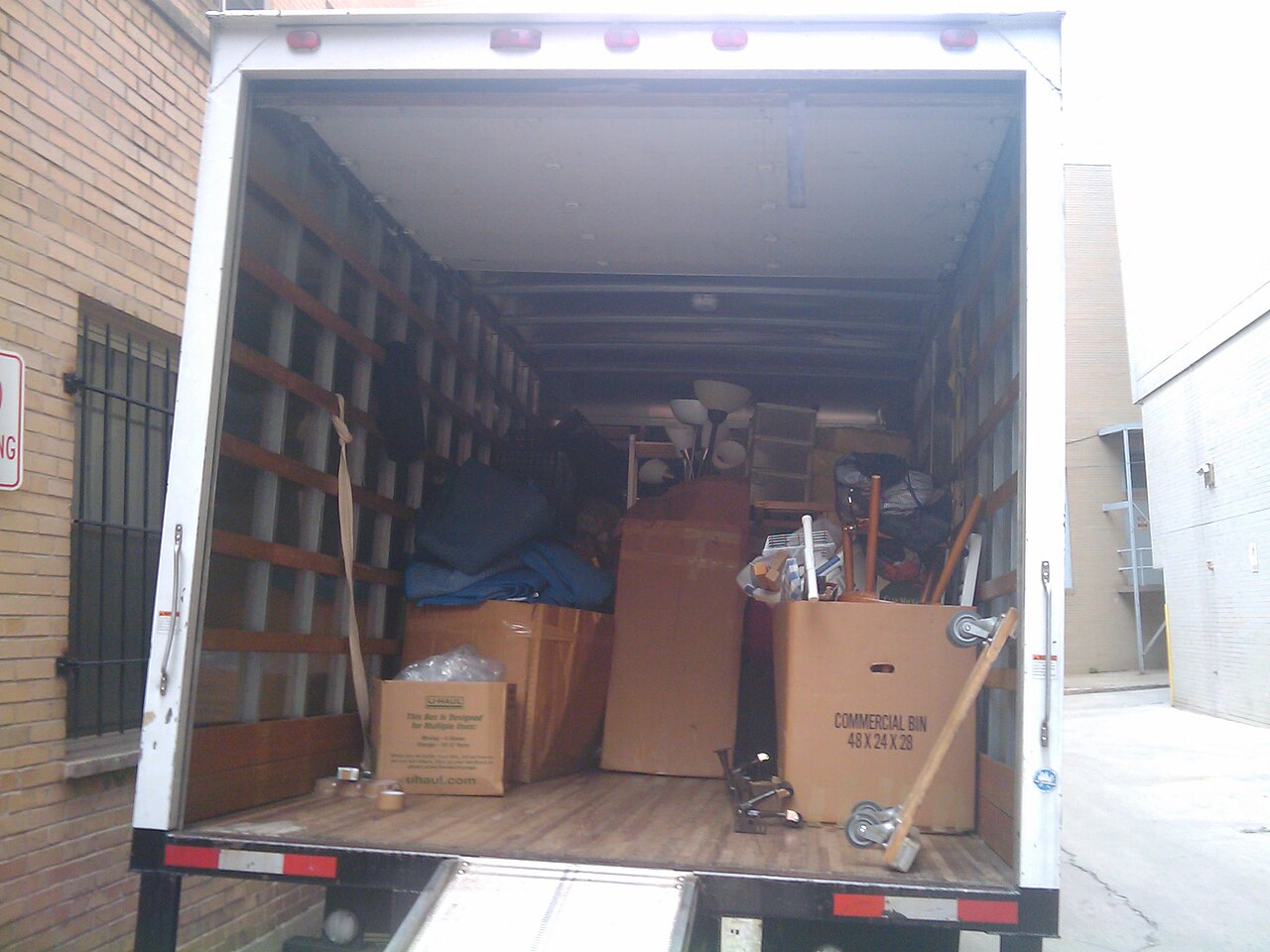

Top Relocation Mistakes to Avoid

Local and Long distance. Professional moving assistance

START YOUR MOVE

Top Relocation Mistakes to Avoid

The moving mistakes that actually cost money — unlicensed carriers, verbal quotes, volume guesses and building access — plus the California rules that decide who pays when it goes wrong.

The expensive mistakes in a move are not the ones people worry about. Nobody's budget is destroyed by forgetting to label a box. Budgets are destroyed by hiring an unlicensed carrier, by accepting a verbal quote that was never binding, by underestimating volume by half, and by discovering on moving day that the truck cannot legally park within 200 feet of the door. This guide covers the ten that actually cost money, with the California rules that decide who is liable when it goes wrong.

Most expensive single mistake
Hiring a mover without a CPUC licence — you lose almost every consumer protection California gives you
Most common mistake
Treating a verbal rate quote as an estimate. In California it is not one.
Rule most people do not know
Your mover must give you the state's "Important Notice to Consumers" booklet, or you are eligible for a $100 refund
Most underestimated number
Volume. Most people guess 30–40% low on how much they own.
Cheapest fix
Book mid-week and mid-month, and start the declutter four weeks out

1. Hiring a mover who is not licensed in California

California regulates intrastate household goods movers through the California Public Utilities Commission. A legitimate intrastate mover has a permit number in the form Cal. T-000000 and shows it. The state's own consumer guidance is blunt about this: avoid contacting movers who do not show their licence number.

For a move that crosses a state line, the regulator is different — the Federal Motor Carrier Safety Administration, and the mover needs a USDOT number and an MC number that you can look up in FMCSA's registered mover database.

Why this is mistake number one. Every protection listed further down this page — the binding written estimate, the not-to-exceed price, the requirement to release your goods on payment — applies to licensed carriers. An unlicensed operator holding your furniture is a civil dispute, not a regulatory complaint, and those take months.

2. Accepting a verbal quote and calling it an estimate

This is the single most common way a $1,200 move becomes a $2,600 invoice. California's rules are specific: written estimates are binding on the mover, and a verbal rate quotation — how much per hour, or per hundred pounds — is not an estimate at all.

Two things a licensed California mover owes you before the work starts:

  • A written estimate. Not a text message with an hourly rate. A document.
  • A Not To Exceed Price. Before the move begins, the mover must tell you a price they cannot exceed, unless you add items or request services that were not in the agreement.

Source: California Public Utilities Commission, Important Information for People Moving Household Goods.

Cardboard moving boxes stacked and labelled before a relocation, the stage where most costly moving mistakes are made

3. Not knowing what paperwork you are owed

Two booklets exist, and most people never see either one. That is worth money.

Move typeDocument you are owedWho must give itIf you do not get it
Within California"Important Notice to Consumers"Your CPUC-licensed carrier, at first contact — or mailed to you if you never meet in personYou are eligible for a $100 refund
Across state lines"Your Rights and Responsibilities When You Move" plus the "Ready to Move" brochureYour FMCSA-registered carrier, before the moveA documented federal violation you can report

The second half of the intrastate rule matters at delivery: a California carrier must release your goods once the total charge due is paid. Holding furniture hostage over a disputed extra is not something a licensed carrier can lawfully do.

4. Underestimating volume

Almost everyone guesses low, and the error compounds: a bigger load means more hours, sometimes a second truck, and occasionally a second day at a higher weekend rate. A garage, an attic and a hall closet routinely add more cubic feet than an entire bedroom.

The fix takes twenty minutes. Walk every room, including the garage and any storage unit, and photograph it. Send the photos with your quote request. A sales specialist reading photographs of your actual garage produces a number far closer to the invoice than one working from "a two-bedroom, I think."

5. Booking on the worst possible day

Demand for movers is not evenly spread. The last week of the month, the first two days of the next one, Saturdays, and the stretch from late May through August are the busiest and most expensive windows in the industry, because leases and school years end then.

  • Mid-week beats weekend, almost always
  • Mid-month beats month-end, almost always
  • October through April beats June through August for availability
  • Book four to six weeks out for a summer date; two weeks is usually enough off-season

If your dates are flexible, our breakdown of the pros and cons of seasonal moving goes through what each season actually costs and what it costs you in other ways.

6. Paying to move things you do not want

On an hourly local move, everything on the truck is billed at the rate it takes to carry it. A treadmill nobody uses, four boxes of paperwork from 2011, and a sofa that will not fit the new living room are all charged like furniture you love.

Start four weeks out, not the week before. Sell what has resale value, donate the rest for a receipt, and recycle what neither. Our guide to how to pack for a move covers the sequence that keeps the declutter from turning into a second full-time job.

7. Ignoring the building before moving day

This is the mistake that turns a five-hour job into an eight-hour job, and it is entirely preventable. Buildings, not belongings, cause most schedule overruns.

What to checkWhy it costs moneyWhen to sort it
Elevator reservation and paddingAn unreserved elevator in a San Francisco or Oakland building can add two hours of waiting, billedTwo weeks out, in writing with the HOA or building manager
Certificate of insurance for the buildingMany Bay Area buildings will not let a crew past the lobby without one on fileTwo weeks out — ask your mover to send it directly
Parking permit or temporary no-parkingA long carry from the nearest legal space is billable time, every tripCity permit offices need 3–10 business days
Street width and truck accessIf a 26-foot truck cannot get in, the job becomes a shuttle with a smaller vehicleAt the quote stage — mention narrow streets and low branches
Move-in time windowsMany buildings only allow moves 9am–5pm on weekdaysBefore you book the date

8. Assuming your belongings are insured

They are covered, but probably not the way you assume. Basic released-value protection is the industry default and it pays by weight, not by what the item is worth — which means a 10-pound laptop is compensated as 10 pounds of generic freight. Full-value protection is a separate, paid election.

Check your homeowner's or renter's policy too: some cover goods in transit, most limit it sharply. Our moving insurance guide explains the difference between the two valuation levels and when paying for the higher one is rational.

9. Packing electronics, documents and valuables like everything else

  • Never put these on the truck. Passports, birth certificates, Social Security cards, jewellery, cash, prescription medication, laptops with the only copy of your work, and car titles. They travel with you.
  • Photograph the back of every device before you unplug it. The photo is worth an hour of guessing at the other end.
  • Screens travel upright, never flat. Flat is how panels crack under the weight of whatever gets stacked on them. Our TV packing guide covers it properly.
  • Books go in small boxes. A large box of books is a back injury and a burst carton. See packing books for a move.
  • Label the side, not the top. Stacked boxes hide their own lids.

10. Forgetting the address change and the utilities

The move ends and then a bill from the old address arrives, or the new place has no power on night one. Neither is expensive to fix in advance and both are expensive to fix afterwards.

  • USPS mail forwarding — file it about two weeks before, not after
  • Power, gas, water and internet at the new address, scheduled to start the day before you arrive
  • Shut-off at the old address scheduled the day after you leave
  • DMV address change — California gives you 10 days to report a change of address
  • Bank, insurance, employer payroll, school records, and any subscription that ships physical goods

Our step-by-step on setting up utilities covers the order to do these in, and California car registration and driver licence covers the DMV side if you are arriving from out of state.

The one-page checklist

  1. Six weeks out. Verify the licence — Cal. T-number for an intrastate move, USDOT and MC number for interstate. Request written estimates from three carriers.
  2. Four weeks out. Start the declutter. Book the date, ideally mid-week and mid-month. Confirm the Not To Exceed Price in writing.
  3. Three weeks out. Reserve the elevator, request the certificate of insurance, apply for the parking permit.
  4. Two weeks out. File mail forwarding. Schedule utilities on and off. Start packing the rooms you do not live in.
  5. One week out. Pack an essentials box you keep with you. Photograph the back of every device. Set aside documents and valuables to travel in your own car.
  6. Moving day. Walk the crew through before they start. Note the foreman's name. Do a final walkthrough of every room, closet and cupboard before you sign anything.

What this looks like when it is booked correctly

Local hourly rate
$175 per hour for two movers and one truck
Deposit
Required to hold the date, and applied to your final invoice
Payment over time
Installment financing between $600 and $4,000. The amount is set by the financing provider after you register, not by us.
Wardrobe boxes
Three reusable wardrobe boxes come with the crew at no charge
Who arrives
In-house employees — a lead foreman running the crew, dispatched by our own office, not a subcontracted team

Comparing options is reasonable and we would rather you did it properly. Our reviews of the best local moving companies and best interstate moving companies set out what to look for in a competitor's quote as well as ours.

Frequently asked questions

How do I check a California mover's licence?

Ask for the Cal. T-number and look it up with the CPUC. If a company will not give you the number, that is the answer. For interstate moves, check the USDOT and MC numbers in FMCSA's registered mover database.

Is a low hourly rate a red flag?

Not by itself — but an hourly rate quoted without a written estimate and a not-to-exceed price is. The rate is one number in a bill made of several: travel time, materials, stairs, long carries, bulky items and shuttle fees all appear on the invoice.

How far in advance should I book?

Four to six weeks for a summer or month-end date in the Bay Area. Two weeks is usually enough in the off-season. Same-week bookings happen, but you take whatever slot is left.

What if something is damaged?

Note it on the inventory before you sign, photograph it immediately, and file the claim in writing. Basic released-value protection pays by weight; full-value protection pays to repair or replace. Which one you have was decided when you booked, not when the damage happened.

Should I tip the crew?

It is customary and not obligatory. Our guide to tipping movers gives the ranges people actually use and the situations where a tip is clearly earned.

Sources: California Public Utilities Commission, Important Information for People Moving Household Goods; Federal Motor Carrier Safety Administration, Protect Your Move. Regulations change — verify current requirements with the regulator before you book.

GET A FREE QUOTE NOW!

Relocation Information
Size of move Studio 1-Bedroom 2-Bedroom 3-Bedroom 4+ -Bedroom Office Other
Contact Information
Your information will not be shared with third parties. We guarantee confidentiality.
Want a great move?
Plan your move with us!
img
Get Moving Today!

Call (415) 579-2747
and Get a Direct Quote

img
Need a Quote Today?

Just fill out a form below

Get a quote
GET a quote now
GET a quote now
img next
GET a quote now
0
GET a quote now
  • name
  • phone
thanks!

We will contact
you shortly