How to Pack for a Move
Packing works when it is spread over four weeks instead of two days. Sort first, buy the right box sizes, keep heavy things in small boxes, label by room, and pack an essentials box that rides in your car. This guide covers the schedule, the materials, each room, what movers cannot load, and how protection actually works.
Start here: the four-week plan
Packing goes wrong when it all happens in the last two days. Spread it over four weeks and the final night is one box, not twenty.
- Four weeks out. Sort and declutter. Order boxes and materials. Book the mover and, in an apartment building, reserve the elevator and the loading zone.
- Three weeks out. Pack storage, off-season clothing, books, decor, and anything you will not touch before the move.
- Two weeks out. Pack the guest room, the garage, most of the kitchen, and the closets. Confirm the date and the access details with your mover.
- One week out. Pack the rest of the kitchen except a few items, plus bathrooms and bedding you can spare.
- Last two days. Pack the essentials box, strip the beds, and set aside what travels with you.

Sort before you pack
Every box you do not pack is money you do not spend. On an hourly move it is time on the clock; on a long-distance move priced by weight, it is directly on the invoice.
Work room by room with four categories: keep, donate, sell, discard. Set a rule you can actually apply, such as anything unused in two years and not sentimental. Book the donation pickup before packing week, or the bags sit in the hallway on move day.
Two things deserve a decision rather than a default: furniture that will not fit the new floor plan, and anything that will cost more to move than to replace.
What to buy, and how much
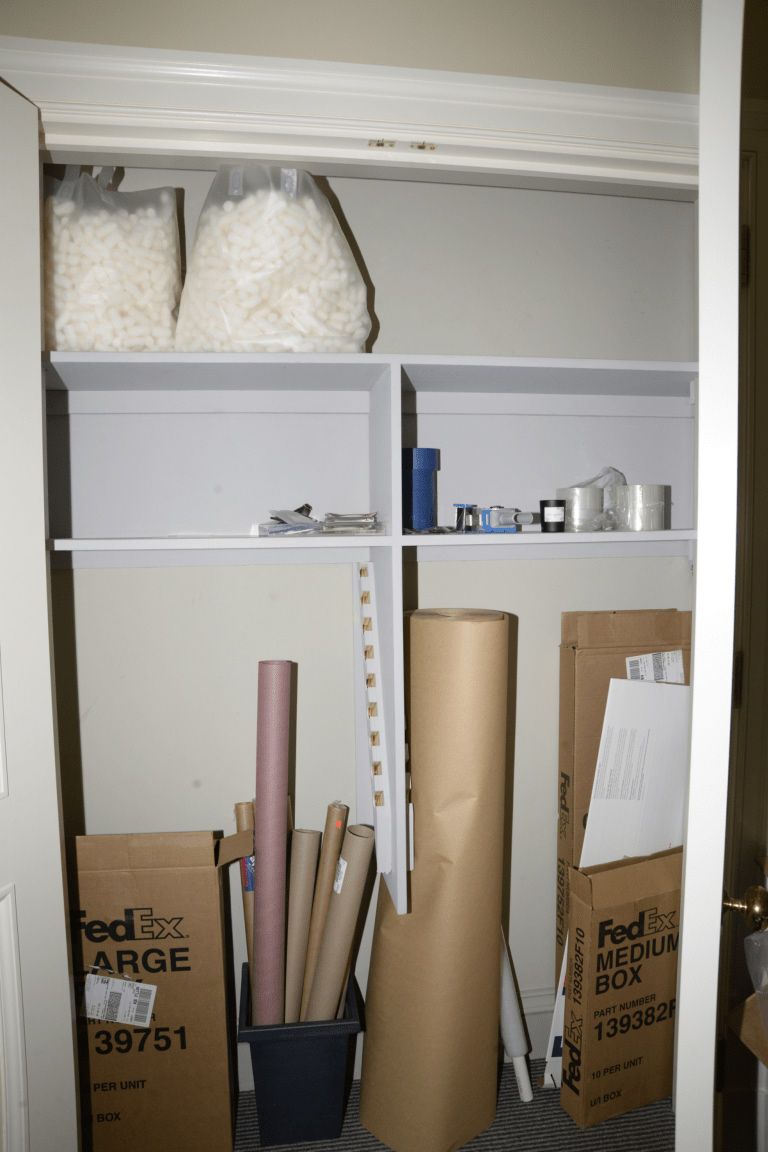
For a one-bedroom apartment, plan on roughly:
- 10 to 15 small boxes (1.5 cu ft) for books, canned goods, tools;
- 10 to 15 medium boxes (3.0 cu ft) for kitchenware, toys, small appliances;
- 5 to 8 large boxes (4.5 cu ft) for bedding, pillows, lampshades;
- 3 to 5 dish barrels or double-wall boxes for the kitchen;
- 2 to 4 wardrobe boxes for hanging clothes;
- a bundle of unprinted packing paper, one roll of bubble wrap, four rolls of tape, markers, and stretch wrap.
Double it for a three-bedroom house. Our crews bring materials to the job, and three reusable wardrobe boxes are part of the standard full-service package with no return requirement. See packing supplies for sizes, or the moving supplies guide for what each material is actually for.
The rules that apply to every box
- Heavy items in small boxes, light items in large ones. This one rule prevents most broken boxes.
- Keep every box under 50 pounds, and books under 40.
- Line the bottom and fill the top. Paper below, paper above, nothing loose in between.
- Fill every gap. If the contents rattle when you tilt the box, it is not finished.
- Tape the bottom seam twice, and cross it for anything heavy.
- Label the top and two sides with the destination room and the contents.
- Do not mix rooms in one box. Unpacking is where mixed boxes cost you.
Room by room
Kitchen
The slowest room, so start it early. Plates travel on edge, never stacked flat. Glasses get individual wrapping and go in a cell divider. Pots nest with paper between them. Knives are wrapped blade-first in a towel and taped. Full details are in the guide to packing dishes and glassware.
Bedroom and closets
Hanging clothes move fastest in wardrobe boxes, straight from rail to rail. Folded clothes can stay in dresser drawers if the dresser is light enough to carry loaded; otherwise they go in large boxes. See packing clothes and packing shoes.
Living room
Electronics get photographed at the back panel before anything is unplugged. Televisions travel upright and padded, as covered in how to pack a TV. Artwork and mirrors go in mirror cartons with corner protection, standing on edge.
Bookshelves
Small boxes, packed flat or spine-down. The method and the weight limits are in packing books.
Bathroom
Tape the caps on anything liquid, bag them, and pack them upright in a lined box. Prescription medication travels with you.
Garage and outdoor
Drain fuel from mowers and trimmers. Movers cannot carry gasoline, propane, paint, solvents, pool chemicals, or aerosols, so plan a disposal run to a household hazardous waste drop-off before the move.
What movers will not load
This surprises people on move day. Federal and state rules and carrier policy keep these off the truck:
- gasoline, propane, kerosene, lighter fluid, charcoal;
- paint, thinners, solvents, aerosols, pool chemicals, fertilizer;
- ammunition, fireworks, matches;
- perishable food and open liquids;
- plants, on most interstate moves;
- cash, jewelry, passports, deeds, and other irreplaceable documents, which should travel with you.
Ask your mover for their full list during the walkthrough, and use it as a disposal checklist.
Labeling that actually helps
Write the destination room first, then two or three words about contents, then any handling note. "Kitchen — glasses — FRAGILE, top load" tells the crew everything they need in one line.
Color-coded tape by room is faster than reading at the door, and it lets the crew place boxes without asking. Number the boxes and keep a short list on your phone if you want to know what is missing at the other end.
Mark one box in every room OPEN FIRST. Those come off the truck last and go in first.
The essentials box
Pack this yourself and put it in your car, not on the truck.
- Two days of clothing per person, plus toiletries and towels.
- Medication, chargers, glasses, keys.
- Documents: lease or closing papers, IDs, the move paperwork.
- Basic tools, a utility knife, a roll of tape, and a flashlight.
- Paper towels, trash bags, soap, and toilet paper.
- Bedding for the first night, or a made-up air mattress.
- Pet food, bowls, litter; kid snacks and one familiar toy.
- Coffee and whatever makes it.
Access is half the job
The building often decides how long a move takes, not the inventory. Sort this out a week ahead.
In San Francisco and Oakland apartment buildings that means reserving the freight elevator, booking a move window with property management, and providing a certificate of insurance if the building requires one. On the street it means checking whether you need a temporary no-parking permit for the curb space, because a truck parked a block away turns into a long carry on the clock.
Hills, narrow stairwells, and older walk-ups are normal in the Bay Area, and they change the plan rather than the price on a confirmed flat rate. Tell your sales specialist about stairs, elevator rules, gate codes, and parking during the walkthrough, and the dispatcher will build them into the schedule. More on this in apartment moving.
Packing yourself versus having it packed
Packing yourself saves labor cost and takes evenings and weekends. Full-service packing takes a day or two and puts the responsibility for how items are wrapped on the crew.
A useful middle path is fragile-only packing: you handle clothing, books, and linens, and the crew packs the kitchen, glassware, artwork, and electronics. That is where most breakage happens and where materials matter most.
Whichever you choose, get the scope in writing. On a flat-rate move the price is fixed for the documented scope, and it changes only if you request or approve something outside it. On a standard hourly move, two movers and a truck are $175 per hour, with disassembly, reassembly, blankets, mattress and furniture protection, floor and doorway protection, loading, transport, unloading, and placement included. If you want an estimate that cannot move, ask about a binding estimate; the FMCSA explains how binding estimates work.
Protection and what it covers
Physical protection and valuation are two different things. Blankets, shrink wrap, mattress bags, and corner guards describe how your things are handled. Valuation describes what the mover owes if something is lost or damaged.
On an interstate move you choose between Released Value Protection, set at $0.60 per pound per article, and Full Value Protection, under which the mover may repair, replace, or settle in cash under the applicable terms. Both are explained in the FMCSA liability and valuation guidance. Declare items of extraordinary value during the walkthrough.
For a move inside California, the terms come from your move documents and state rules. The Bureau of Household Goods and Services publishes consumer guidance for California movers, including what to check before you sign. Our own explainer is at moving insurance.
Move-week checklist
- Decluttering finished; donations gone.
- Materials on hand, boxes assembled.
- Elevator, loading zone, and any building certificate arranged.
- Hazardous items disposed of.
- Utilities scheduled at both addresses.
- Every box labeled by room and contents.
- Essentials box packed and in the car.
- Valuables and documents separated out.
- Beds stripped, appliances emptied and defrosted.
- Walkthrough of every closet, cabinet, and the garage.
Setting up service at the new place is its own task; see how to set up utilities.
Where California Movers USA fits
We handle the parts that are hard to do alone: the fragile packing, the furniture disassembly, the stairs, and the loading order. The crews are California Movers USA employees rather than subcontracted labor, and each move has a sales specialist for scope, a dispatcher for scheduling, and a lead foreman on site.
If you want a starting number, tell us the addresses, the date, the inventory, and the access details at get a quote. For how flat-rate and hourly pricing are built, see pricing, and for what happens after booking, see the FAQ.
Questions people ask
When should I start packing?
Four weeks out for a house, two to three for a one-bedroom. Start with what you do not use.
What should I pack first?
Storage, decor, books, off-season clothing, and the guest room. Anything you will not miss.
How many boxes will I need?
Roughly 30 to 40 for a one-bedroom, 60 to 80 for a two-bedroom, and over 100 for a family house. Buy fewer than you expect and top up; unused flat boxes are easy to return, mid-pack shortages are not.
Can I leave clothes in the dresser?
Usually yes for light dressers. Heavy solid-wood pieces are safer emptied, and the crew will tell you which is which.
Do I have to empty the kitchen cabinets myself?
Not if packing is part of your scope. If you are packing yourself, the kitchen is the room to start earliest.
What travels with me rather than on the truck?
Documents, jewelry, cash, medication, chargers, laptops, and anything irreplaceable.