On This Page
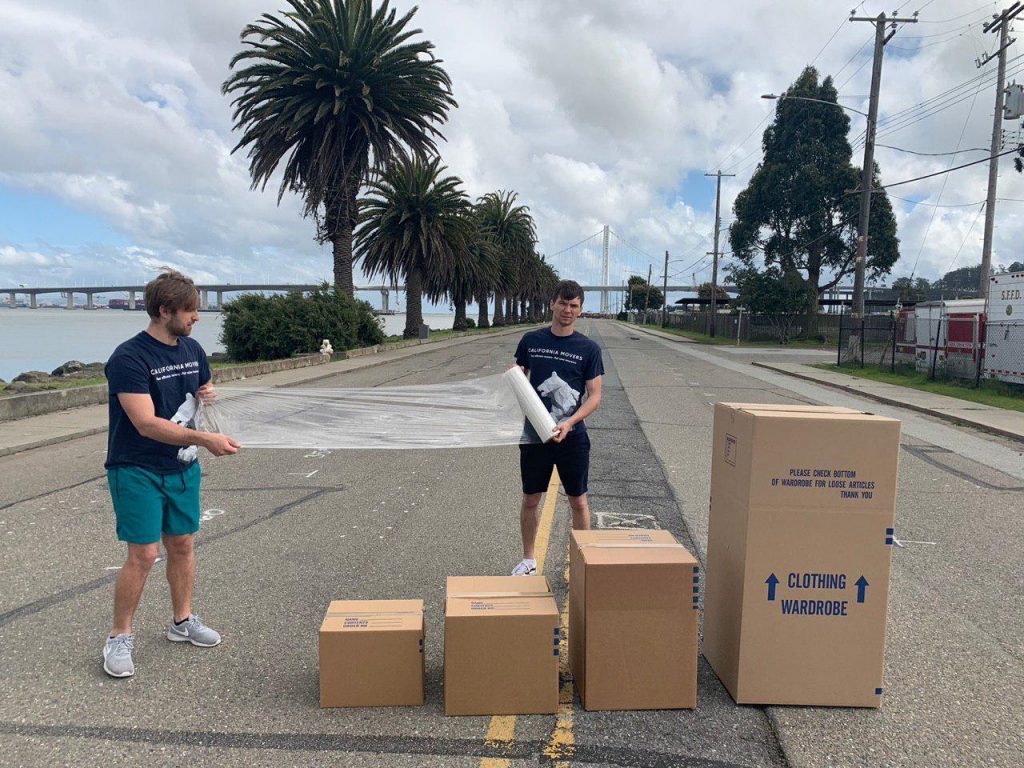
What Packing Actually Covers
Packing is quoted as its own line, never absorbed into the moving clock without being named. California Movers USA is a packing moving company, so you choose how much of the work the crew does, and the written scope says exactly which rooms and which items it covers.
| Package | What the crew does | Usually chosen when |
|---|---|---|
| Full packing services | Every room, from the kitchen to the closets, plus labeling and an inventory of what went into each box | You are short on time, or the move is large enough that self-packing would take weeks |
| Partial packing | Named rooms only, most often the kitchen, the china cabinet and the home office | You will pack clothing and books yourself but do not want to touch glass or electronics |
| Fragile-only packing | Glassware, ceramics, mirrors, artwork, TVs, lamps and anything with an awkward shape | The rest of the home is simple, and the risk sits in a handful of items |
| Packing and unpacking services | Boxes opened at the destination, contents placed on flat surfaces, packing debris removed | You want the new home usable the same evening rather than in two weeks |
| Custom crating | A wooden crate built around a single item — a large mirror, a marble top, a piece of art | An item is valuable or fragile enough that a carton is not sufficient protection |
Packing can be booked with a local move, a long-distance move, or on its own if you have already arranged transport. The pricing page explains how the hourly and flat-rate models work.
What Packing Costs
Packing labor runs on the same published rate as the move: $175 per hour for two trained movers and one truck, or $270 per hour for a crew of four. There is no separate packing service and no packing fee — the hours are the price. On a local move the materials come with it: cartons, paper, tape and the specialty boxes are not billed as their own line.
A packing day and a moving day can be combined or split. Splitting them is common on larger homes: the crew packs on one day and loads on the next, so nothing is rushed and the truck is not waiting while cartons are still being taped.
What decides how many hours packing takes
| Factor | Faster when | Takes longer when |
|---|---|---|
| Kitchen | Everyday dishes, few specialty pieces | Stemware, a china service, small appliances and a full pantry |
| Decor | Little on the walls, few loose ornaments | Framed art, mirrors, collections and shelves of small objects |
| Clothing | Wardrobe boxes go straight onto the closet rail | Drawers and storage bins have to be sorted before they can be packed |
| Sorting | You already decided what is not moving | Decisions are still being made while the crew waits |
| Access | The crew works room to room without moving furniture first | Boxes have to be staged in a hallway or carried down before the truck arrives |
| Electronics | Original boxes are available for TVs and monitors | Every screen needs a custom carton and corner protection |
The single biggest saving is deciding what is not moving before the crew arrives. Packing a box you will unpack and discard costs the same as packing one you actually need.
A Packing Day, Hour by Hour
This is an example, not a quote. It shows how full packing services usually run for a prepared two-bedroom apartment, with two packers at $175 per hour, the day before the truck arrives.
9:00The crew walks the apartment with you. You point out what is not moving, what is fragile and what has to stay accessible until the last minute.
9:20Cartons, paper, bubble and tape are staged by room. Wardrobe boxes are assembled and stood up in each closet.
9:35The kitchen starts first, because it is always the slowest room. Plates go on edge in dish packs, glassware is wrapped individually, the pantry is sorted for what can travel.
11:30Bookcases and the home office. Books go in small cartons so nobody is asked to lift eighty pounds, cables are bagged and labeled against the device they belong to.
12:45Art, mirrors and the TV. Each screen gets a purpose-made carton with corner protection; frames are faced with paper, then edge-protected and boxed flat.
14:00Bedrooms and closets. Hanging clothing transfers straight from the rail into wardrobe boxes; drawers are packed as they are wherever the furniture allows it.
15:30Bathrooms and the last odds and ends. Liquids are sealed and bagged so a leak cannot reach anything else in the carton.
16:15Every box is labeled with its destination room and a short note on contents. The count is confirmed with you and written down.
16:45Debris is cleared, walkways are opened up for the next day, and the crew leaves.
Two-bedroom, full packing$1,3567.75 billable hours × $175
On a local move the cartons, paper, tape and specialty boxes are included, so this is the whole packing figure.
Same home, fragile-only$5253 billable hours × $175
Kitchen glass, art, mirrors and screens. You pack the books, clothing and linens.
Both numbers assume the sorting was already done. The most expensive packing day is the one where the crew stands still while somebody decides whether a box of paperwork is coming along.
How the Crew Packs Each Room
Packing is not just putting things in boxes. Each room has a failure mode, and the method exists to prevent it.
| Room | What usually breaks | How the crew prevents it |
|---|---|---|
| Kitchen | Plates cracking under their own weight, stems snapping | Dish packs with double walls, plates stood on edge rather than stacked flat, each glass wrapped and cells kept full so nothing shifts |
| Living room | Screens flexing, frames punching through paper | TV cartons sized to the screen with corner blocks; art faced, edge-protected and boxed upright, never laid under other items |
| Bedroom | Clothing creasing and mattresses picking up dirt | Wardrobe boxes take hanging clothes straight off the rail; mattresses go into covers before they leave the room |
| Home office | Cables orphaned from devices, paperwork mixed up | Cables bagged and labeled against their device, files kept in order rather than tipped into a carton |
| Bathroom | Liquids leaking into everything around them | Caps taped, bottles bagged, and liquids kept out of cartons holding paper or fabric |
| Garage | Sharp tools cutting through cartons, hazardous items traveling by mistake | Edges sheathed, heavy items in small boxes, and anything on the non-allowable list set aside before loading |
Every box gets three things
- the destination room written on it, not the room it came from;
- a short note on contents, so an urgent item can be found without opening six cartons;
- a fragile mark where it applies, which changes where the box sits in the truck.
The box count is confirmed with you at the end of the day and written down. That count is what gets checked at delivery.
Boxes You Pack Yourself
Packing your own boxes is completely normal and often sensible. But it changes something most movers never mention, so here it is plainly.
What FMCSA says about owner-packed cartons
- If the articles you packed yourself are damaged, it can be harder to establish a claim against the mover for those boxes, because nobody but you saw how they were packed.
- Under Released Value protection, a mover is responsible for no more than 60 cents per pound per article — a five-pound lamp is three dollars, whatever it cost you.
- Under Full Value Protection, the mover is responsible for the replacement value of the shipment, but may limit liability for items of extraordinary value — over $100 per pound, such as jewelry, china or furs.
- Those extraordinary-value items stay covered if you list them specifically on the shipping documents. That listing is your job, and it takes five minutes.
Source: FMCSA, Liability & Protection. These federal rules apply to interstate moves; a move inside California follows the valuation terms written into your own move documents.
What that means in practice
Worth packing yourself
- Books, linens, towels and bedding
- Clothing that is not going on a hanger
- Shoes, bags and sports equipment
- Plastic storage bins that already close properly
- Anything you would shrug at if it arrived scratched
Worth handing to the crew
- Glassware, stemware and a china service
- Framed art, mirrors and anything under glass
- TVs, monitors and desktop computers
- Lamps, ceramics and irregular shapes
- Anything you would be genuinely upset to lose
Whatever you decide, tell the crew which boxes you packed. It goes on the paperwork, and it is far better to have that written down before the move than to argue about it afterwards.
What We Cannot Pack
Two separate lists. The first is what may not travel on a moving truck at all. The second is what can travel but really should not.
Does not go on the truck
- Gasoline, kerosene, lighter fluid and other flammable liquids
- Propane tanks, camping fuel and pressurized cylinders
- Aerosols, paint thinner, acids and pool chemicals
- Fireworks, ammunition, matches and charcoal
- Car batteries and fire extinguishers
- Fertilizer, weed killer and pesticides
- Perishable food, open containers and anything frozen
- Live plants on a long-distance move, where they will not survive the trailer
Keep it with you
- Passports, birth certificates and immigration documents
- Medication and prescriptions
- Keys, chargers and phones
- Jewelry, watches and precious metals
- Laptops, hard drives and backups
- Cash, cards and financial records
- The moving paperwork itself
- Anything with no replacement value, whatever it weighs
The crew will point out anything from the first list during the walkthrough, and it is easier to use up or dispose of those items in the week beforehand than to discover them on packing morning. Many California cities run household hazardous waste drop-offs for exactly this.
Materials and What Is Included
On a local move the packing materials are included. Cartons, paper, tape, dish packs, mirror cartons and TV boxes are single-use and are not billed as their own line. Wardrobe boxes are the one item that goes back: free to use during the move, free to hand back at the end, and charged only if you decide to keep them. On a long-distance or interstate move, packing labor and materials are priced in the written estimate instead.
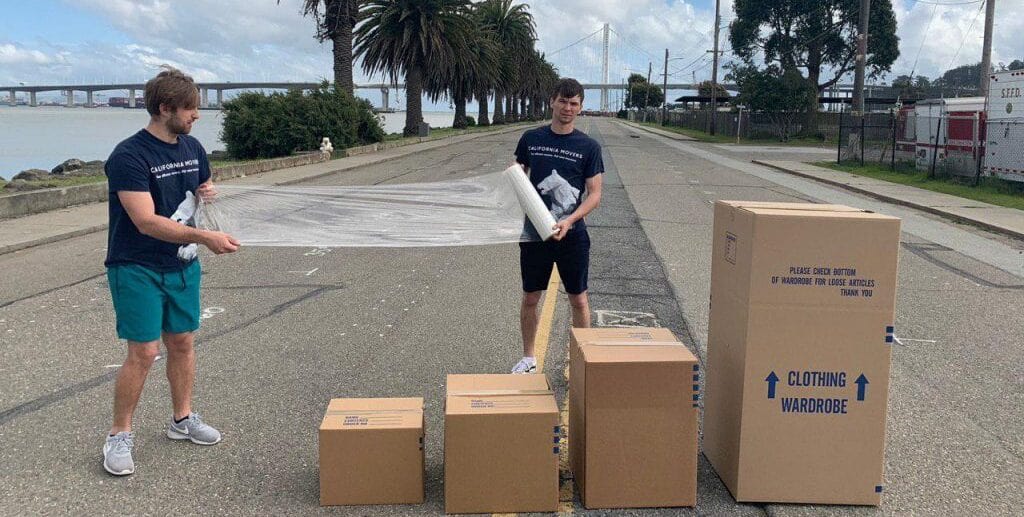
| Material | What it is for |
|---|---|
| Small cartons | Books, records, tools and anything dense enough that a large box would be unliftable |
| Medium and large cartons | Kitchenware, linens, toys and the bulk of a household |
| Dish packs | Double-walled cartons with cell dividers for plates, bowls and stemware |
| Wardrobe boxes | Hanging clothing straight off the rail, with the rail built in |
| Mirror and art cartons | Adjustable flat boxes for framed pieces, mirrors and glass tops |
| TV cartons | Sized to the screen, with corner blocks that hold the panel clear of the walls |
| Packing paper and bubble | Wrapping and void fill, so nothing shifts inside a carton |
| Mattress covers | Keeping a mattress clean between the bedroom and the truck |
| Shrink wrap and moving blankets | Furniture protection, already included in the moving rate |
| Custom crating | Built around one item when a carton is not enough |
If you would rather buy materials and pack at your own pace, the moving supplies page lists what is available. Using your own boxes is fine, as long as they close properly and are strong enough for what is in them.
Before Packing Day
Half an hour of preparation reliably removes an hour of billable packing. Work through this the week before.
Decide first
- What is being donated, sold or thrown out is already separated
- Anything not moving is in one place and clearly marked
- You know which rooms the crew is packing and which you are doing
- Items you need on the last night are set aside in your own bag
Handle yourself
- Valuables, documents and medication are packed for you to carry
- Extraordinary-value items are listed for the paperwork
- Flammables and aerosols have been used up or disposed of
- The fridge and freezer are emptied and defrosted
- Backups are made of anything on a computer that is moving
Make it easy
- Walkways and doorways are clear
- Someone who can answer questions is present
- Pets have somewhere else to be
- Original boxes for TVs and monitors are found if you kept them
- Parking and building access are arranged for the delivery of materials
If you are also handling the truck side of the move, the local moving page has the access checklist for moving day itself.
Where We Pack
California Movers USA offers packing services in the Bay Area and across the same service area it moves, including the Sacramento region and Southern California. Packing crews come from the same in-house team that loads the truck, so the people who wrapped your glassware are the people who carry it.
Bay Area
- Bay Area
- Oakland
- Berkeley
- San Jose
- Fremont
- Concord
- Antioch
- Vallejo
- Santa Rosa
- Daly City
- Livermore
- Sunnyvale
- Contra Costa County
Sacramento and the Central Valley
Southern California
Every city page lists the access and parking realities that also shape a packing day. The full directory is on the moving locations page.
Packing FAQ
How much do packing services cost?
Packing labor runs on the published moving rate: $175 per hour for two trained movers and one truck, or $270 per hour for a crew of four. There is no separate packing fee, and on a local move the materials are included as well. The written scope names the rooms, the packages and the materials before you book.
Can I book packing without booking the move?
Yes. Packing can be quoted on its own if you have already arranged transport, and it can also be split across two days so the crew packs one day and loads the next.
Do I have to pack anything myself?
No. Full packing services cover every room. Many customers pack books, linens and clothing themselves and hand over the kitchen, the art and the electronics, which is usually where the risk sits.
Is it a problem if I pack my own boxes?
It is common and perfectly fine. Be aware that FMCSA notes it can be harder to establish a claim for boxes the owner packed, because nobody else saw how they were filled. Tell the crew which cartons are yours so it goes on the paperwork.
What is Released Value protection?
It is the most limited liability option, and on an interstate move it is set at 60 cents per pound per article. A heavy inexpensive item and a light valuable one are treated the same way, so it is not a substitute for listing what matters.
How do I protect items of extraordinary value?
FMCSA describes items of extraordinary value as those worth more than $100 per pound, such as jewelry, china or furs. List them specifically on the shipping documents. Anything truly irreplaceable is better carried by you.
What will the crew refuse to pack?
Flammable liquids, propane and other pressurized cylinders, aerosols, paint thinner, acids, pool chemicals, fireworks, ammunition, car batteries, fire extinguishers, fertilizer, pesticides and perishable food do not travel on a moving truck.
Are packing materials included?
On a local move, yes. Cartons, paper, bubble, tape, dish packs, mirror cartons and TV boxes are included rather than billed as a separate line. Wardrobe boxes are free to use and free to give back at the end of the move, and are charged only if you keep them. On a long-distance move, materials are priced in the written estimate.
Can I use my own boxes?
Yes, as long as they close properly and are strong enough for the contents. The crew will say so if a carton is not safe to load, and will offer a replacement rather than sending it as it is.
Do you unpack as well?
Yes. Unpacking opens the cartons, places contents on flat surfaces and removes the packing debris. It is quoted separately and is usually booked for the day after delivery.
How far ahead should I book packing?
As early as you can, especially at the end of a month and through the summer. Packing normally happens the day before the move, so both dates need to be held together.
Tell Us What Needs Packing
Send the address, the moving date, how many rooms and which of them you want the crew to handle. California Movers USA will confirm the package, the crew size, the materials and the price before you book.
Get My Packing QuotePacking is quoted as its own line and named in the written scope, so it is never a surprise on the invoice. Once the scope is confirmed, the deposit and payment options explain how the date is reserved.