Office Movers in California
An office move is judged on one thing: whether the business opens on time. California Movers USA plans commercial moves backwards from that hour — the moment staff walk in on Monday — and works evenings and weekends so the working week is not spent in boxes. The base crew is $175 per hour for two movers and one truck; the crew size, the number of trucks and the schedule are confirmed in writing before the date is held. This page covers what an office move costs, how a Friday-night move runs hour by hour, what building management will ask for before it releases the freight elevator, and what has to be decided eight weeks out.
GET A FREE QUOTE NOW!
What our beloved customers are saying
Sheil Doroh
Customer
Matthew Long
Manager
From:
Mission Valley, San Diego
To:
Kearny Messa, San Diego
Yelp
Our company was so impressed by California Movers' professional and efficient service. We’ll be happy to recommend your company should any of our colleagues be planning a move in the future!
Julie Timberg
Customer
Matthew Long
Manager
From:
Sunnyvale, San Jose
To:
Willow Glen, San Jose
Yelp
California Movers' team was helpful, efficient, and professional. They made the move easy and fast. Even better, they came in under their quote!
Customer
Matthew Long
Manager
From:
East Sacramento
To:
North Sacramento
Yelp
Thanks so much for the great service. It was a pleasure knowing you and looking forward to using your team in the near future.
Margaret Owler
Customer
Matthew Long
Manager
From:
vista West, Wayoming
To:
Lander, Wayoming
Yelp
What an amazing job guys from California movers did for us; all our staff was pleasantly surprised by the service, we highly recommend this moving company. Thank you.
On This Page
Services Businesses Book Alongside an Office Move
Most commercial moves need one or two of these as well. Each is quoted as its own line, so you can see exactly what it adds to the written price.
Two clarifications. Packing and unpacking are billed at the same hourly rate rather than as a separate service, and cartons and packing paper are not charged — only crates and containers you keep. Additional buildings, floors or stops add time at the same rate: $175 an hour for two movers, $270 an hour for a crew of four. There is no flat surcharge for either.
Appliances and hardwired equipment have to be disconnected before the crew arrives — California Movers USA does not disconnect or reconnect gas, water or electrical appliances. A certificate of insurance for either building is issued on request at no charge.
Packing Services
Learn More
Crates, materials and packing labor when the crew packs desks and archives instead of staff.
Storage
Learn More
Partner warehouse with climate control and round-the-clock access for archives and furniture between dates.
Furniture Moving
Learn More
Conference tables, reception pieces and heavy items handled on their own, without a whole-office move.
Local Moving
Learn More
Hourly crews for short-haul commercial and residential work across the Bay Area and beyond.
Long Distance Moving
Learn More
For a business relocating out of the region, quoted as one written price for a confirmed scope.
Moving Supplies
Learn More
Boxes, crates, paper and wrap delivered ahead of move night so desks are cleared in advance.
What California Movers USA Moves for Businesses
Commercial work is not one job. A dental practice and a 40-desk software office both need a truck, but almost nothing else about the two moves is the same. California Movers USA is a commercial moving company that handles both. What follows is what California Movers USA is asked for most often, and what usually sets the schedule in each case.
| Type of move | Typical scope | What sets the schedule |
|---|---|---|
| Corporate office | Workstations, monitors and docks, files, storage, break room, conference rooms | The building's permitted move hours and the freight elevator |
| Professional practice | Clinic, dental, legal or design office: equipment, records, reception furniture | The client or patient calendar, and how records are handled |
| Retail | Fixtures, shelving, stock, point-of-sale, back-of-house | The lease turnover date and mall or center loading rules |
| Hospitality | Furniture, fixtures and equipment in volume, floor by floor | Occupancy, and which floors can be released at a time |
| School and campus | Classrooms, labs, libraries, admin offices | Term breaks and campus access |
| Warehouse and light industrial | Racking, inventory, benches, equipment | Dock hours and forklift access at both ends |
| Internal reconfiguration | Desks and departments moved within one building | Usually one evening, often without a truck at all |
If your move is a department rather than a company, say so early. A single-floor reconfiguration is priced and staffed completely differently from a building-to-building move.
What an Office Move Costs
Office work is normally hourly, and an office moving company should be able to tell you what an hour actually buys before you book. California Movers USA's published package is $175 per hour for two movers and one truck. Most commercial jobs need more than that, and the crew size, the number of trucks and any evening or weekend scheduling are set at the estimate and written into your agreement — not decided on the night.
| What drives the hours | Faster when | Slower when |
|---|---|---|
| Desk readiness | Every employee has cleared their own desk into their own labeled box | The crew is boxing personal items on the night |
| Floor plan | Desks are numbered and the plan is on the wall at the destination | Placement is decided item by item as the truck unloads |
| Freight elevator | Reserved at both ends, with a known window | Shared with other tenants, or not booked at all |
| Loading access | A dock or a legal truck position close to the door | A long carry through a lobby, or street loading only |
| Furniture systems | Standard desks and benching | Panel systems, height-adjustable frames and built-ins |
| Volume of paper | Archives purged or already crated | Filing cabinets moved full, or files loose |
| Old equipment | Decommissioning arranged separately, before the move | Dead monitors and chairs discovered on move night |
A fully specified office move — confirmed inventory, confirmed access, confirmed schedule — can also be quoted as a flat price. The pricing page explains when each model is used, and the moving quote guide covers what California Movers USA verifies before issuing a written figure.
A Friday-Night Office Move, Hour by Hour
A composite built from ordinary California Movers USA commercial work, not one client's file: a 34-person office moving from two floors in one building to a single floor across town. The business closed on Friday evening and opened on Monday morning without losing a working hour.
Thursday16:00
Labels go up. Every desk at the new office gets its number from the floor plan; every employee gets a matching crate and two labels. Nothing is packed yet.
17:30
Staff leave. Each person has already emptied their own desk and drawers into their own crate — the one task the crew cannot do faster than the people who own the contents.
18:00
Crew arrives. The certificate of insurance has been on file with both buildings for two weeks and the freight elevator is held at each end.
18:15
Floor protection, corner guards and lift padding go into the lobby, corridors and both elevators before a single item moves.
18:40
Monitors, docks, keyboards and cables are boxed per desk — one box, one person, labeled with the destination desk number, not the old one.
19:30
Desks, benching and panel systems are taken down. Hardware is bagged and labeled by unit so the same fixings go back into the same frame.
21:00
First truck loads: desks, chairs, monitors and personal crates, in the order they will be needed on arrival.
23:30
First delivery. The numbered floor plan is taped up by the lift before anything is carried in, so every item has an address.
08:00
Second load: filing, storage, break room, conference rooms and reception.
14:00
Desks are rebuilt to the plan and each crate is set down at the desk written on its label.
17:00
Walkthrough with the office manager. A short snag list is agreed and signed, padding and debris come out.
All day
The client's IT team reconnects. Anything on the snag list is put right before Monday.
09:00
Staff arrive, find their own crate at their own desk, and unpack it themselves in twenty minutes.
What would have pushed this off schedule
- A certificate of insurance the new building's management would not accept — the freight elevator does not get released, and the move does not start.
- A freight elevator that was never reserved, so the crew shares a passenger lift with weekend deliveries.
- Desks not cleared by staff, which turns a mover's night into a packing night at an hourly rate.
- No numbered floor plan, so every desk placement becomes a question for whoever is still awake.
- Twenty dead monitors and a stack of broken chairs discovered at 21:00, with nowhere legal to put them.
None of those are dramatic. All of them are the difference between opening on Monday and opening on Wednesday.
Working Evenings and Weekends
Most commercial buildings restrict moves to outside business hours anyway. California Movers USA schedules around that rather than against it, because the real cost of an office move is rarely the invoice — it is the hours the business is not working.
Weekday move
2 days
of working time lost
The office packs on one day and unpacks on the next, with staff present for both. Lifts are shared with other tenants and the building may cap the hours the crew is allowed to work.
Evening or weekend move
0 days
of working time lost
The business closes on Friday and opens on Monday. Freight elevators are free, corridors are empty, and the crew works a continuous run instead of around people at their desks.
Two things to check with your landlord before setting the date: the hours the building permits moves, and whether after-hours access, security or HVAC is billed to the tenant. Those charges come from the building, not from the mover, and they are worth knowing before the date is chosen rather than after.
Illustrative comparison based on routine commercial work. Your own schedule is confirmed in writing once the inventory and building rules are verified.
Certificates of Insurance and Building Rules
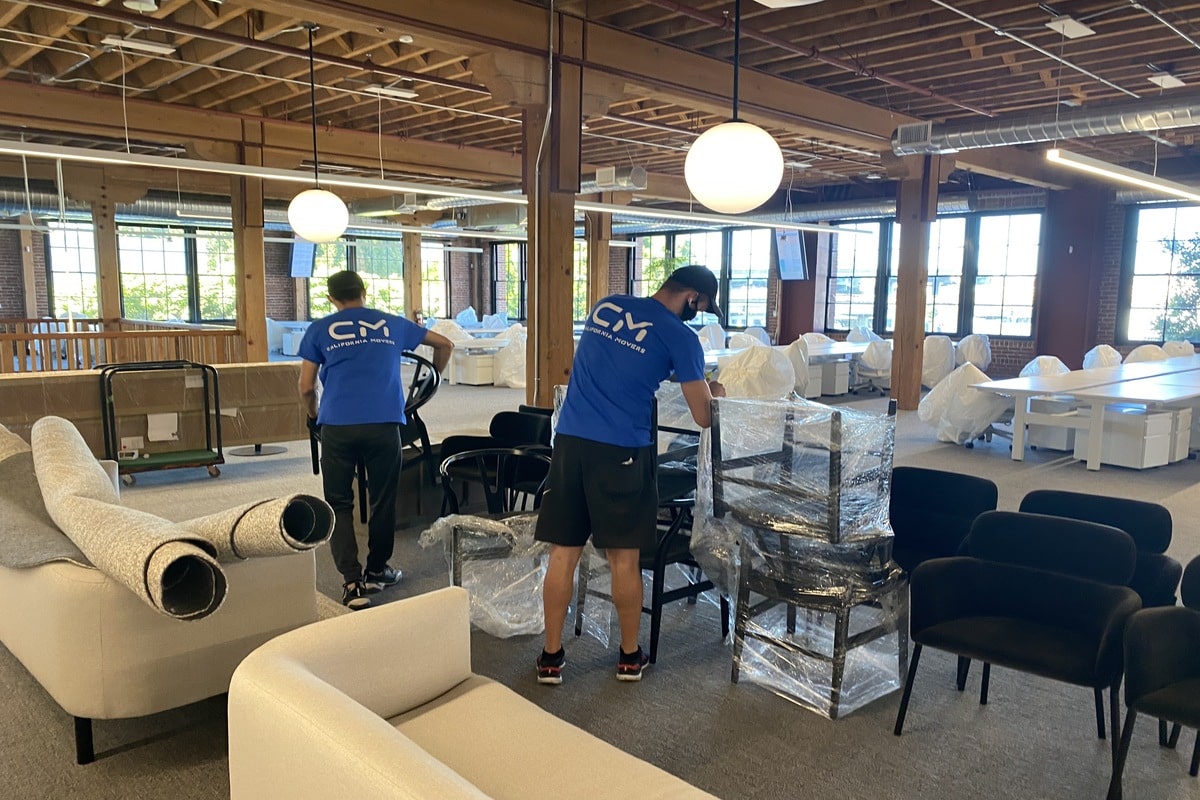
This is the paperwork that stops more office moves than anything else, and it stops them at the worst possible moment — the evening the crew arrives. Most commercial buildings will not release a freight elevator, a loading dock or an after-hours access card until they hold a certificate of insurance naming them in their own wording.
What building management usually asks for
- A certificate of insurance issued to the building's exact legal entity name — not the trading name on the signage, and not the property manager's name.
- General liability, automobile liability and workers' compensation coverage, at the limits set in the building's tenant handbook.
- An additional insured or certificate holder endorsement naming the landlord, the property manager and sometimes the tenant.
- Dates that cover the whole move window, including the Sunday nobody planned to work.
- The certificate on file before the elevator is reserved — allow two weeks, and longer if the building's insurer reviews the wording.
California Movers USA issues these for both buildings. The one thing California Movers USA needs from you is the requirement itself: the tenant handbook page, the exact entity names and the limits. Send that at quote stage and the certificate is a non-event; send it the week of the move and it becomes the reason the date slips.
The rest of the building's list
- Freight elevator reservation at both ends, with a start and end time, not "sometime Saturday".
- Permitted move hours, and whether weekends are allowed at all.
- Dock or loading zone booking, and the height clearance if the dock is under a garage.
- Protection of common areas — lobby floors, lift interiors, corridor corners. California Movers USA brings and fits this.
- After-hours security, HVAC or engineer charges. These are billed by the building to the tenant, not by the mover, and they are worth pricing before the date is set.
- Access cards, codes or an escort for the crew, arranged for the actual hours they will be on site.
California Movers USA operates under CAL-T203846 and carries company insurance for its moving operation. That covers the business. The valuation elected for your own shipment is a separate choice recorded in your move documents — physical protection, company insurance and valuation are three different things, and it is worth knowing which one applies to your equipment.
Workstations, IT and Equipment
An office move succeeds or fails on labeling. Furniture can be rebuilt anywhere; a box with no destination on it has to be opened by somebody who does not own it.
One crate, one person, one desk number
Every employee gets a crate and a label carrying the destination desk number from the new floor plan. Staff pack their own desks and drawers — not because it saves money on the invoice, though it does, but because nobody else can decide what belongs in the bin. On Monday each person finds their own crate at their own desk and unpacks it in twenty minutes.
The floor plan is the single most useful document
A numbered plan of the new office, printed and taped up by the lift, removes almost every question the crew would otherwise have to ask at midnight. Number the desks, number the rooms, and give the crew a copy in advance.
Furniture systems
- Desks, benching, panel systems and height-adjustable frames are taken apart and rebuilt to the plan.
- Hardware is bagged and labeled by unit, so the same fixings return to the same frame.
- Filing cabinets travel empty unless they are built to be moved loaded; contents go into crates.
- Built-in joinery, glazing and anything anchored to the structure is a contractor's job, not a mover's — flag it early so it is scheduled, not discovered.
Computers and network equipment
- Monitors, docks, keyboards and cables are boxed per desk and travel with that person's crate.
- California Movers USA moves the equipment. Disconnection and reconnection stay with your IT team or your provider, so nobody is troubleshooting a network at 2am on a mover's clock.
- Server racks, network cabinets and anything on a UPS are quoted separately and moved with your IT people present.
- If a machine holds sensitive data, keep it in your own custody and say so in advance rather than after it is on the truck.
What you are not taking
Every office move surfaces a pile of dead equipment, and it cannot simply go in the dumpster. In California, electronic devices, CRT monitors, fluorescent lamps and batteries are classified as universal waste under Title 22, Division 4.5, Chapter 23 of the California Code of Regulations, and businesses are barred from putting most of them in the regular trash — they have to go to an authorized handler. California Movers USA moves what you are keeping; decommissioning and e-waste collection should be booked with a licensed recycler before move night, so twenty dead monitors are not standing in a corridor at nine in the evening.
Universal waste categories and the trash prohibition are set by the California Department of Toxic Substances Control under Title 22 CCR, Division 4.5, Chapter 23. Confirmed September 2026. Check your own generator status and county rules before disposing of anything.
What the Rate Includes and What Is Quoted Separately
Both lists are settled before the date is held. Nothing on the right appears on an invoice without your written approval first.
In the hourly rate
- The crew and the truck
- Trained, background-checked California Movers USA employees
- Desk, benching and furniture disassembly and reassembly
- Pads, shrink wrap, straps, dollies and equipment
- Floor, corner and elevator protection at both buildings
- Loading, transport and unloading
- Placement to your numbered floor plan
- The certificate of insurance for building management
- Basic protection at 60 cents per pound per article
Quoted as its own line
- Crates and specialty containers you keep
- Server racks, network cabinets and specialty equipment
- Storage between the two dates
- A shuttle where a full-size truck cannot reach the door
- Debris removal and decommissioning
- Valuation above the basic 60 cents per pound
Sixty cents per pound per article is a liability level built into the rate, not insurance. It pays by weight, which is a poor match for office equipment: a laptop weighs very little and costs a great deal. If that gap matters for your inventory, raise it during the estimate so the right valuation is recorded in your move documents.
Storage for Archives and Furniture
Two dates rarely line up cleanly. A lease ends before a fit-out finishes, a floor is being refurbished, or a company downsizes and keeps furniture for a future office. California Movers USA stores what does not travel yet.
- Storage runs through a partner warehouse, with climate control available.
- Access is around the clock, arranged by calling the office, so an archive box can be retrieved without waiting for a business day.
- Pickup, the inventory, the storage period and redelivery are quoted as separate components, not folded into one number.
- Furniture is stored wrapped, on the same inventory it left on.
Full rates, unit sizes and the difference between storage-in-transit and permanent storage are set out on the moving storage page.
Two clarifications. Packing and unpacking are billed at the same hourly rate rather than as a separate service, and cartons and packing paper are not charged — only crates and containers you keep. Additional buildings, floors or stops add time at the same rate: $175 an hour for two movers, $270 an hour for a crew of four. There is no flat surcharge for either.
Appliances and hardwired equipment have to be disconnected before the crew arrives — California Movers USA does not disconnect or reconnect gas, water or electrical appliances. A certificate of insurance for either building is issued on request at no charge.
The Eight-Week Timeline
Nothing here is exotic. It is simply the order in which decisions have to be made so that none of them is being made on move night.
| When | What has to happen | Who owns it |
|---|---|---|
| 8 weeks out | Move date agreed with both landlords; permitted hours and weekend access confirmed; walkthrough booked with California Movers USA | Office manager |
| 6 weeks out | Inventory and access verified at both buildings; written estimate, crew size and schedule issued; date reserved | California Movers USA and office manager |
| 4 weeks out | Certificate of insurance requirements sent to California Movers USA; new floor plan finalised and desks numbered | Office manager |
| 3 weeks out | Decommissioning and e-waste collection booked; furniture that is not moving identified | Office manager |
| 2 weeks out | Certificates on file at both buildings; freight elevators and docks reserved; IT confirms its own cutover plan | California Movers USA, building, IT |
| 1 week out | Crates and labels delivered; desk numbers issued to every employee; the plan is circulated | Office manager |
| Day before | Staff clear desks into their own crates; fridges emptied; access cards and escorts confirmed for the crew's actual hours | Everyone |
| Move night | Protection fitted, load, deliver, rebuild to the plan, walkthrough and snag list signed | California Movers USA |
| Week after | Snags cleared, crates collected, storage and decommissioning closed out | California Movers USA and office manager |
A short-notice move is still possible — California Movers USA does them — but every week removed from this list moves work onto move night, and move night is the most expensive hour in the plan.
Checklist Before Move Night
Three lists, three owners. If all three are clear by the day before, the move is a logistics job rather than a rescue.
Office manager
- Certificates of insurance on file at both buildings
- Freight elevators and docks reserved, with times
- Numbered floor plan printed and shared
- Every desk number issued to its employee
- Access cards, codes or escort arranged for the crew's hours
- Furniture not moving is tagged and separated
- Decommissioning and e-waste booked
IT
- Cutover plan agreed with the move schedule
- Network live at the new office before delivery
- Server and rack move quoted and scheduled separately
- Backups verified before anything is unplugged
- Someone reachable during the move window
- Equipment holding sensitive data kept in your custody
Every employee
- Desk and drawers emptied into their own crate
- Crate labeled with the destination desk number
- Personal valuables taken home, not packed
- Monitors and docks left for the crew to box
- Nothing left in the fridge or on the floor
- Anything fragile flagged rather than buried
Where California Movers USA Does Office Moves
As commercial office movers California businesses book for everything from a single-floor reconfiguration to a building-to-building move, California Movers USA runs crews from its San Francisco base across the Bay Area, the Sacramento region and Southern California. It is also the office moving company Bay Area tenants most often call for evening and weekend work. Each city page covers the access conditions that shape a move in that place.
- Bay Area
- Oakland
- Berkeley
- San Jose
- Fremont
- Concord
- Vallejo
- Daly City
- Sunnyvale
- Livermore
- Contra Costa County
- Sacramento
- Roseville
- Stockton
- Fresno
- Los Angeles
- Pasadena
- Glendale
- Santa Monica
- Orange County
- Irvine
- San Diego
The full directory is on the moving locations page. Offices that are relocating out of the region are handled as long-distance moves.
Office Moving FAQ
How much does an office move cost?
California Movers USA's published package is $175 per hour for two movers and one truck. Most commercial jobs need a larger crew and more than one truck, and that is set at the estimate along with the schedule, so the figure you approve is the figure the crew works to.
Is an office move hourly or a flat price?
Usually hourly, because readiness at the origin is the largest variable and it is one you control. A fully specified move — confirmed inventory, confirmed access, confirmed schedule — can be quoted as a flat price instead. The pricing page compares the two models.
Can you move us at night or over a weekend?
Yes, and for most offices that is the sensible plan. Many buildings restrict moves to outside business hours anyway. Closing Friday evening and opening Monday morning is the difference between losing two working days and losing none.
Do you provide a certificate of insurance for our building?
Yes, for both buildings. Send California Movers USA the tenant handbook requirement, the exact legal entity names and the coverage limits at quote stage. Allow two weeks: most buildings will not release a freight elevator until the certificate is on file in their own wording.
Who packs the desks?
Staff pack their own desks into their own labeled crates. It is faster, it costs less, and nobody else can decide what belongs in the bin. California Movers USA can pack desks instead, quoted as its own line.
Do you disconnect and reconnect computers?
California Movers USA moves the equipment and boxes monitors, docks and cables per desk. Disconnection and reconnection stay with your IT team or provider, so the network cutover is run by the people who own it.
Can you move server racks?
Yes, quoted separately and scheduled with your IT people present. Racks, network cabinets and anything on a UPS are not treated as ordinary furniture.
Will you take away our old furniture and dead monitors?
Decommissioning is quoted separately and should be booked before move night. In California, electronics, CRT monitors, lamps and batteries are universal waste and businesses cannot put most of them in the regular trash, so they have to go to an authorized handler rather than into a skip.
Can you store furniture or archives between our two dates?
Yes. Storage runs through a partner warehouse with climate control available and around-the-clock access arranged by calling the office. Pickup, the storage period and redelivery are quoted as separate components.
Do you move single departments or reconfigure one floor?
Yes, and often without a truck. An internal reconfiguration is priced and staffed differently from a building-to-building move, so say which one you need when you ask for a quote.
Does California Movers USA subcontract commercial crews?
No. California Movers USA's commercial movers are trained, background-checked employees, with a lead foreman on site and a dispatcher coordinating the run. The people who quoted the work are accountable for it.
How far in advance should we book?
Eight weeks is comfortable, because the certificate of insurance and the elevator reservations sit on the critical path. Shorter notice is possible, but every week removed pushes work onto move night.
What is the most common reason an office move runs late?
Paperwork, not furniture. A certificate the building will not accept, or a freight elevator nobody reserved, stops a crew that is otherwise ready to work.
Get a Written Price for Your Office Move
Send the two addresses, the headcount, the move date and the building requirements at each end. California Movers USA will confirm the crew size, the schedule and the included work in writing before the date is held.
Get My Office Moving PriceA starting figure is not the written estimate. Once the scope is confirmed, the deposit and payment options explain how the date is reserved and how the balance can be paid.
Two clarifications. Packing and unpacking are billed at the same hourly rate rather than as a separate service, and cartons and packing paper are not charged — only crates and containers you keep. Additional buildings, floors or stops add time at the same rate: $175 an hour for two movers, $270 an hour for a crew of four. There is no flat surcharge for either.
Appliances and hardwired equipment have to be disconnected before the crew arrives — California Movers USA does not disconnect or reconnect gas, water or electrical appliances. A certificate of insurance for either building is issued on request at no charge.