On This Page
When Storage Belongs in a Move
Most storage is not a long-term decision. It is a gap: the lease ends before the next one starts, escrow slips, or the new place needs work before furniture can go in. California Movers USA treats moving and storage as one plan rather than a separate contract you have to arrange yourself.
| Situation | What usually happens | What the plan has to cover |
|---|---|---|
| Gap between two leases | Everything comes out on one date and goes in weeks later | Pickup, storage period, redelivery date and the second delivery access |
| Closing date moves | The move is booked and the date shifts by days, not months | A short hold with a flexible redelivery window |
| Renovation before move-in | Part of the home goes in, part goes to storage | A split inventory, so the right half is redelivered |
| Downsizing | The new home does not fit everything yet | What stays, what stores, and how long before that is decided |
| Long-distance timing | The shipment arrives before the destination is ready | Storage at the destination end and a delivery window |
| Office relocation | Equipment and furniture leave before the new floor is finished | Phased redelivery so the business can reopen in stages |
Storage is quoted as its own set of line items inside the move, so you can see what the handling costs, what the storage period costs and what redelivery costs. The pricing page explains how those sit inside the flat-rate and hourly models.
How Moving Storage Works
Storage inside a move is not the same as renting a unit and carrying boxes in yourself. The crew handles both ends, and the shipment is documented on the way in and on the way out.
| Step | What happens | Who owns it |
|---|---|---|
| 1. Scope | The inventory, the expected storage period and the redelivery plan are confirmed before booking, because all three affect the price. | Sales specialist |
| 2. Pickup | The crew protects, disassembles and loads exactly as on any other move day. Nothing is treated more roughly because it is going into storage. | Lead foreman |
| 3. Inventory | Items are listed and tagged as they go in, so what enters storage is written down rather than remembered. | Lead foreman |
| 4. Storage | The shipment is held for the agreed period under the terms named in your documents. | Dispatcher |
| 5. Redelivery | You confirm the date, the crew loads out, and delivery runs like a normal move: protection, placement, reassembly. | Dispatcher and foreman |
| 6. Closeout | The inventory is checked against what left, and the paperwork is closed. | Lead foreman |
Because the same in-house crew handles both ends, the people who wrapped a piece are the people who unwrap it. California Movers USA does not subcontract moving crews, and that does not change when a warehouse sits in the middle.
The warehouse and getting to your things
The shipment is held at a partner warehouse that California Movers USA works with, and that facility is climate-controlled — which matters over weeks rather than days, because humidity and temperature swings are what damage wood, upholstery, paper and electronics in storage, not the storage itself.
Access runs around the clock, arranged by calling the office. That is a deliberate difference from a self-storage unit you walk into with your own key: your shipment sits in California Movers USA's care under the move plan, so retrieval is set up through the dispatcher rather than by turning up at a gate. Call, say what you need out, and the visit is arranged.
It is worth knowing which boxes you are likely to want back before the shipment goes in. Retrieving one labeled carton is straightforward; finding an unlabeled one among sixty is not.
A Two-Month Gap, Week by Week
This is an example, not a quote. It shows how a one-bedroom move with a two-month gap between leases usually runs when storage sits in the middle.
Wk 0Scope confirmed. You tell California Movers USA the move-out date, the approximate move-in date and what is going into storage rather than traveling with you.
Wk 1Move-out day. The crew protects the building, wraps and disassembles, and loads. Each item is tagged and listed as it goes on the truck.
Wk 1The shipment goes into storage the same day. You receive the inventory and the documents naming the storage period and the terms that apply to it.
Wk 4You get a closing date for the new place and give California Movers USA a target redelivery window. Nothing is loaded until you confirm.
Wk 7Redelivery is fixed. Access at the new address is reviewed: elevator window, parking, carry distance, whether a permit is needed.
Wk 8Load-out from storage. The inventory is checked against what went in before the truck leaves the warehouse.
Wk 8Delivery day. Protection goes down, boxes go to the labeled rooms, furniture is reassembled and placed, and the paperwork is closed with you.
The two dates that matter are the move-out date, which is usually fixed by a lease, and the redelivery date, which is usually not. Booking the first without a plan for the second is what turns a two-month gap into a four-month one.
What Decides the Storage Price
Storage is not one number. It is three: getting the shipment in, holding it, and getting it back out. Each is quoted separately so you can see what you are paying for.
| Component | What it covers | What moves the number |
|---|---|---|
| Moving labor | The crew and truck on move-out day, at the published rate of $175 per hour for two movers and one truck, or $270 per hour for a crew of four | Inventory, access, stairs, parking and how ready the home is |
| Warehouse handling | Unloading into storage, tagging and listing the inventory | The number of items and how much has to be handled individually |
| Storage period | Holding the shipment for the agreed time | Volume and how long it stays |
| Redelivery | Load-out, transport and delivery at the new address | Access at the destination and the distance from the warehouse |
| Packing and materials | Packing runs at the same hourly rate as the move. On a local job the single-use materials are included; the reusable blankets and wardrobe boxes that stay wrapped around the shipment in storage are the part that is charged | How much you pack yourself |
| Specialty handling | Crating, piano or oversized items | Whether anything needs more than a carton and a blanket |
The single biggest lever is volume. Deciding what is not going into storage before move-out day is cheaper than deciding it two months later with the truck already loaded.
Storage unit sizes and rates
These are the standard storage unit sizes and rates for the space itself. Moving labor, warehouse handling and redelivery are quoted separately, as set out above.
| Unit size | Square feet | Monthly rent | What it holds |
|---|---|---|---|
| 5 × 5 | 25 | $105 | Closet-sized. Boxes, seasonal items and a few small pieces. |
| 5 × 10 | 50 | $130 | Walk-in closet. Small furniture plus the boxes that go with it. |
| 10 × 10 | 100 | $195 | Single garage. Larger furniture and the contents of a one-bedroom. |
| 10 × 15 | 150 | $245 | Small room. Roughly a studio or a well-filled one-bedroom. |
| 10 × 30 | 300 | $330 | Room-sized. Enough for the contents of a two-bedroom apartment. |
| Custom | — | Quoted | When the inventory does not fit a standard size, the space is quoted to the shipment. |
If you are not sure which size the shipment needs, do not guess. The inventory taken during scope confirmation decides it, and paying for a size larger than the load is the most common avoidable cost in storage.
Storage in Transit and Permanent Storage
On an interstate move there is a legal difference between storage that is part of the move and storage that has become warehousing. It changes who is responsible for your things, and federal rules say the mover has to warn you before it happens.
49 CFR 375.609 — storing household goods in transit
- Storage in transit is temporary warehouse storage pending further transportation. While the shipment is in transit storage, the mover is still handling it as a carrier.
- Before that period ends, the mover must notify you in writing of the date the shipment converts to permanent storage.
- That notice has to arrive at least 10 days before the expiration date, or one day before when the storage period itself is shorter than ten days.
- The notice must state that the carrier's liability is ending and that the goods become subject to the rules, regulations and charges of the warehouseman.
- After conversion to permanent storage there is a nine-month period in which you may still file claims.
- The shipment must be stored in your name, with the warehouse contact details provided to you.
- If the mover fails to give that notice, carrier liability is extended until the end of the day after notice is actually given.
Source: 49 CFR § 375.609. These federal rules govern interstate household-goods moves. A move that stays inside California follows the storage terms written into your own move documents.
The practical version: ask before you sign how long the storage period runs, what happens on the day it ends, and who is responsible for the shipment after that date. A mover who cannot answer those three questions in writing is not the one to hold your furniture.
Inventory, Condition and Protection
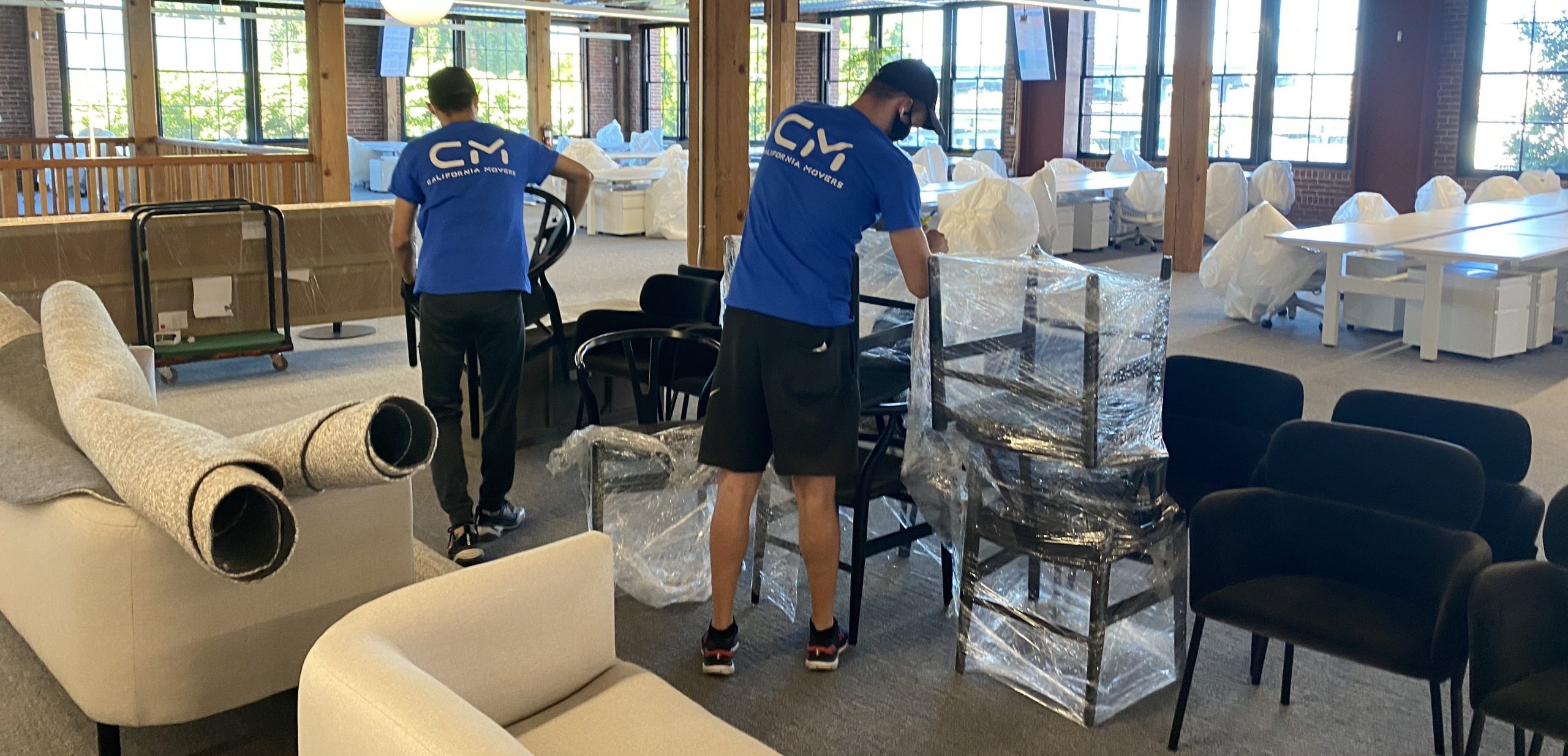
Everything that goes into storage is written down. That list is the reason a two-month gap does not turn into an argument about whether a nightstand ever existed.
What gets documented
- an item-by-item inventory taken as the shipment goes in, not reconstructed afterwards;
- tags that tie each piece to your shipment rather than to a shelf;
- the condition noted at the point of handover;
- which cartons you packed yourself and which the crew packed;
- anything of extraordinary value that you declared, listed separately.
Protection and valuation are not the same thing
Physical protection is what the crew does: blankets, wrapping, mattress covers, disassembly so nothing is loaded under stress. Valuation is the financial responsibility that applies to the shipment, and it is a choice recorded in your move documents.
California Movers USA operates under CAL-T203846 and maintains company insurance for its moving operation. That covers the business. It is not a blanket promise that every item is insured for what you paid for it, and no mover should tell you otherwise. Ask which valuation option applies while the shipment is in storage, and ask for it in writing — for interstate shipments that answer changes on the day storage converts to permanent, as described above.
Items of extraordinary value need to be declared rather than assumed. Anything genuinely irreplaceable is better kept with you than sent into a warehouse for two months.
What Cannot Go Into Storage
The list is longer than for a normal move, because things that survive a two-hour drive do not survive eight weeks in a warehouse.
Never goes into storage
- Gasoline, propane, camping fuel and pressurized cylinders
- Aerosols, solvents, paint thinner, acids and pool chemicals
- Fireworks, ammunition and matches
- Fertilizer, weed killer and pesticides
- Car batteries and fire extinguishers
- Perishable and frozen food
- Live plants and anything else alive
- Anything that leaks, smells or attracts pests
Keep it with you instead
- Passports, deeds, birth certificates and immigration papers
- Medication and prescriptions
- Jewelry, watches and precious metals
- Laptops, hard drives and backups
- Cash, cards and financial records
- Anything you will need before the redelivery date
- Seasonal items you will want mid-storage
- Anything irreplaceable, whatever it is worth on paper
That last point is the one people regret. Before the truck loads, walk through the inventory and pull out anything you will actually need during the storage period — a box in a warehouse is not a box in a spare room.
Before Your Things Go In
Storage is the one part of a move where a small oversight costs weeks rather than hours. Work through this before move-out day.
Decide
- What is going into storage and what is traveling with you is settled
- Anything you will need during the storage period is pulled out
- What is being donated or sold has already gone
- You have a realistic redelivery window, even if the date can still move
Prepare
- Fridge and freezer are emptied, defrosted and dry
- Fuel is drained from mowers, trimmers and anything with an engine
- Liquids are sealed, bagged or left behind
- Electronics are backed up before they disappear for two months
- Furniture that needs disassembly is identified in advance
Put in writing
- The storage period and what happens on the day it ends
- Which valuation applies while the shipment is stored
- Items of extraordinary value are declared and listed
- Which cartons you packed yourself
- You know which cartons you may want back mid-storage, and they are labeled
Access is the question most people forget until they need a winter coat in November. Retrieval is available around the clock through the office, but it goes much faster when the box you want has a label on it.
Where We Store and Deliver
California Movers USA offers moving and storage Bay Area customers can book as a single job, and the same service runs across San Francisco, the Sacramento region and Southern California. As a moving and storage company it keeps the same crew and the same dispatcher on both halves of the work, so storage sits inside one move plan rather than beside it.
Bay Area
- Bay Area
- Oakland
- Berkeley
- San Jose
- Fremont
- Concord
- Antioch
- Vallejo
- Santa Rosa
- Daly City
- Livermore
- Sunnyvale
- Contra Costa County
Sacramento and the Central Valley
Southern California
Redelivery distance from the warehouse is one of the components in a storage quote, so the destination city matters. The full directory is on the moving locations page.
Storage FAQ
Does California Movers USA offer storage as part of a move?
Yes. Storage is quoted inside the move plan rather than arranged separately, so the same crew handles pickup, the warehouse handover and redelivery. The inventory, the storage period and the redelivery plan are confirmed before booking.
How much does moving storage cost?
Moving storage cost is quoted in parts: the moving labor on pickup day at $175 per hour for two movers and one truck, or $270 per hour for a crew of four, the warehouse handling, the storage period itself, and redelivery. Volume and how long the shipment stays are what move the number most.
How long can I store my things?
The storage period is agreed before booking and written into your documents. On interstate moves, federal rules require the mover to tell you in writing at least ten days before the shipment converts from storage in transit to permanent storage.
What is storage in transit?
It is temporary warehouse storage while the shipment is still part of the move. FMCSA defines it as storage pending further transportation. While the shipment is in transit storage, the mover is still handling it as a carrier.
What changes when storage becomes permanent?
The carrier's liability ends and the goods become subject to the warehouseman's rules, regulations and charges. The mover must notify you in writing before that date, and there is a nine-month window after conversion in which you can still file claims.
Can I get something out of storage before the redelivery date?
Yes. Access is available around the clock, arranged by calling the office. The shipment is held at a climate-controlled partner warehouse in California Movers USA’s care rather than as a unit you walk into, so a retrieval visit is set up through the dispatcher instead of at a gate.
Are my things insured while in storage?
Insurance and valuation are not the same thing. California Movers USA operates under CAL-T203846 and carries company insurance for its moving operation; the valuation that applies to your own shipment is a separate choice recorded in your move documents. Ask specifically which valuation applies during the storage period.
What cannot go into storage?
Flammable liquids, propane and other pressurized cylinders, aerosols, solvents, acids, pool chemicals, fireworks, ammunition, fertilizer, pesticides, car batteries, fire extinguishers, perishable food and live plants. Anything that leaks, smells or attracts pests stays out.
Do I need to pack before things go into storage?
Everything that would be boxed for a move should be boxed for storage. California Movers USA can handle full, partial or fragile-only packing, quoted as its own line on the same hourly rate.
Is my inventory written down?
Yes. Items are listed and tagged as they go into storage, and that list is checked again on the way out. Tell the crew which cartons you packed yourself so it is recorded.
Can storage be used at the destination end of a long-distance move?
Yes. If the shipment arrives before the new address is ready, storage at the destination end is planned into the delivery window rather than improvised on arrival.
Tell Us About the Gap
Send the move-out date, the approximate redelivery date, what is going into storage and where it has to come back to. California Movers USA will quote the labor, the handling, the storage period and the redelivery as separate lines before you book.
Get My Storage QuoteOnce the scope is confirmed, the deposit and payment options explain how the dates are reserved and how the balance can be paid.