Interstate Movers in California
The moment your shipment crosses a state line, a different set of rules takes over. California's licensing stops at the border; from there your move is governed by federal regulation, and that regulation gives you specific, enforceable rights — a survey before the estimate, a cap on what you can be asked to pay at delivery, the right to watch your shipment being weighed, and the right to demand it be weighed again. Almost no moving company's website tells you any of this, which is exactly why it is worth knowing. California Movers USA moves households out of California, and this page is mostly about the rules that protect you while it does.
GET A FREE QUOTE NOW!
What our beloved customers are saying
Daniel
Customer
Eliza
Manager
From:
Colorado
To:
California
Yelp
It was my first time moving and I was really afraid of the movers. Was heard that they often take extra fees after the move. Besides, I have read the stories from the other people and their experience was awful. The guys that came from California Movers were wonderful! Not only they took everything with care, but all was done with a smile. They have done everything on time and everything was disassembled, packed properly and loaded very quickly. Nick and his team are professionals, punctual, considerate, and honest. I would recommend them to everyone. Great guys and the company!
Kendall
Customer
Eliza
Manager
From:
California
To:
Maryland
Yelp
I have used California Movers twice. All these times we had great experience. Great company with amazing customer service! We need to move urgently, so California Movers reached us out in the same day and made our move fast. I can recommend this company! John and the team helped us both times and it was a pleasure to work with. Highly recommend!
On This Page
What Makes a Move Interstate
Not distance — a state line. A move from San Francisco to San Diego is five hundred miles and is intrastate, regulated by California. A move from San Francisco to Reno is half that and is interstate, regulated federally. The two are governed by different bodies, different paperwork and different protections.
| Inside California | Across a state line | |
|---|---|---|
| Who regulates it | Bureau of Household Goods and Services. California Movers USA operates under CAL-T203846 | Federal Motor Carrier Safety Administration, under 49 CFR Part 375 |
| What the estimate rests on | A visual inspection of the goods | A physical survey, with narrow exceptions |
| The price protection | A Not To Exceed price, given before the move begins | The 110% rule on a non-binding estimate at delivery |
| How the price is built | Hourly, or a flat price for a defined scope | Commonly on the weight of the shipment and the services |
| Required reading | The BHGS booklet for moves within California | Two federal publications, given with the estimate |
| Your weighing rights | Not applicable in the same form | Observe the weighing, and demand a reweigh before unloading |
This matters commercially as well as legally: a California license number tells you nothing about a mover's authority to take your belongings to Nevada. Interstate carriers operate under federal registration, and you can check a company on the FMCSA's Protect Your Move site before you book anyone. If a move stays inside the state, the long-distance moving page is the one that applies.
Services That Sit Beside an Interstate Move
Each is quoted as its own line, so you can see exactly what it adds to the written price.
Appliances have to be disconnected and drained before the crew arrives. California Movers USA does not disconnect or reconnect gas, water or electrical appliances — that is work for a qualified plumber, electrician or gas fitter, and it has to be finished before the truck is loaded.
Long Distance Moving
Learn More
Long routes that stay inside California, where state rules rather than federal ones apply.
State to State Moving
Learn More
Named routes out of California — Nevada, Arizona, Oregon, Washington, Texas and beyond.
Packing Services
Learn More
Full or partial packing, with labor and materials priced separately from the move itself.
Storage
Learn More
Storage in transit between the two dates, quoted with pickup, storage and redelivery separate.
The Survey, and the Estimate That Follows It
This is the first protection, and the one most often skipped by companies that quote a suspiciously low number over the phone.
What the regulation requires
- The carrier must conduct a physical survey of the household goods and give the shipper a written estimate based on that survey.
- The exception is narrow: it applies where the goods are located beyond a 50-mile radius of the location of the carrier's agent preparing the estimate.
- The survey can be waived — but the waiver must be in writing and signed by the shipper before the shipment is loaded. Not after, and not verbally.
49 CFR § 375.401. Confirmed September 2026. Summarized here, not reproduced in full.
With the written estimate you must also receive two federal publications: Your Rights and Responsibilities When You Move and Ready to Move? (49 CFR § 375.213). They are short, they are free, and they say much of what is on this page. A mover who does not give them to you has told you something useful.
Binding and non-binding — the difference that matters
- A binding estimate fixes the price for the scope written down. If the shipment is what you said it was, the number does not move.
- A non-binding estimate is the carrier's best assessment. The final charge is based on the actual weight and services — which is where the 110% rule below becomes the thing standing between you and an open-ended bill.
Either is legitimate. What is not legitimate is not knowing which one you have. Ask, and read the words on the document rather than the number.
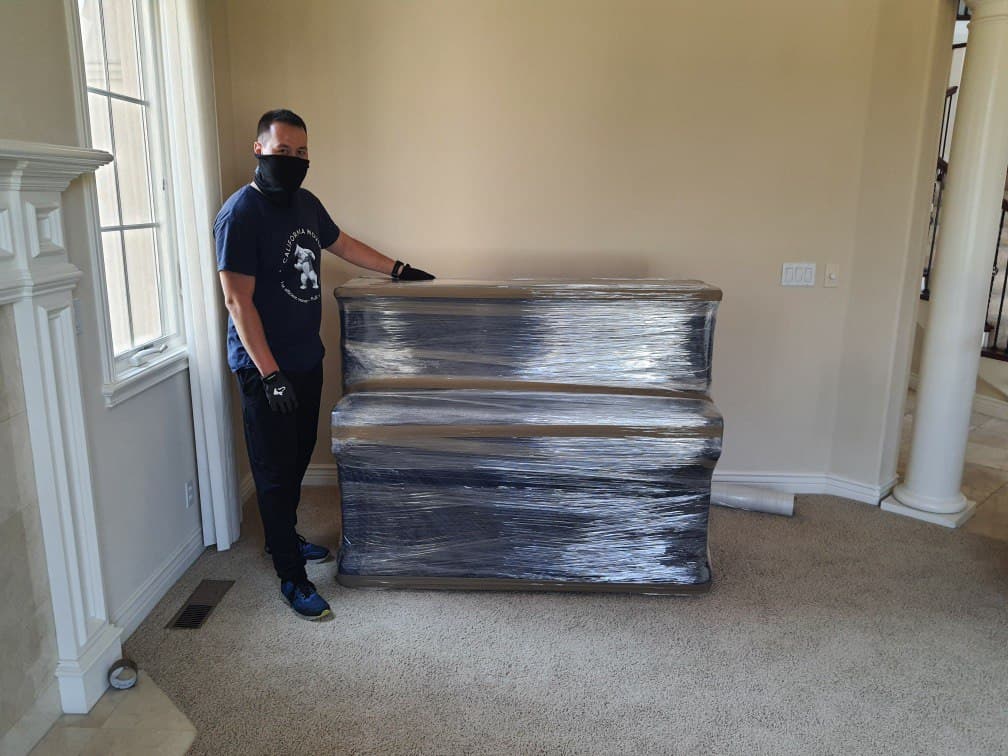
This rule protects you only against a carrier bound by it. California Movers USA gives a written estimate after a survey rather than a figure over the phone, which is what makes the protection below real rather than theoretical.
The 110% Rule at Delivery
This is the single most useful thing to know about an interstate move, and it exists precisely because the classic abuse is to raise the price once your belongings are on a truck two states away.
What you can be asked to pay on the day
- On a non-binding estimate, you cannot be required to pay more than 110% of the estimate at the time of delivery.
- If you pay up to that 110%, the carrier must relinquish possession of the shipment — your belongings come off the truck.
- Anything owed above that figure is billed afterwards, through the normal billing process. It is not held over your furniture.
49 CFR §§ 375.405 and 375.407. Confirmed September 2026. Summarized here, not reproduced in full — your own move documents and the federal booklets govern.
Read that once more, because it inverts the situation people fear most. A driver who tells you at the curb that the price has gone up and the load stays on the truck until you pay it in full is describing something the regulation does not permit. Know the number, keep the estimate with you on delivery day, and know that the balance is a billing question rather than a hostage negotiation.
Weighing, and Your Right to a Reweigh
On a non-binding interstate move, weight is usually what you are paying for. So the weight is worth checking — and the regulation gives you two rights that almost nobody uses because almost nobody is told about them.
Two rights, and the deadline on the second
- You may observe the weighing. The carrier must give the shipper — or whoever is paying the freight charges — the right to observe all weighings of the shipment.
- You may demand a reweigh. After you are told the billing weight and the total charges, and before unloading actually begins, you can demand that the shipment be weighed again.
- If you do, the freight charges must be based on the reweigh weight.
- The window is the point that matters: once unloading has started, the moment has passed.
49 CFR §§ 375.513, 375.515 and 375.517. Confirmed September 2026.
Practically: ask for the billing weight before anything comes off the truck, not after. If the number is far from what the survey suggested, that is the moment to say so.
Valuation: The Choice That Decides Everything
Every interstate shipment moves under one of two levels of carrier liability. This is the single largest variable in what happens if something is damaged, and it is decided by a box on a form that many people sign without reading.
Full Value Protection
- The default level of liability on an interstate move
- The carrier is responsible for the replacement value of the shipment, subject to the terms of your documents
- It has a cost, which appears in your paperwork
- You keep it unless you actively choose otherwise
Released Value Protection
- Costs nothing — which is why it looks attractive
- The carrier is responsible for no more than 60 cents per pound per article
- A 25-pound television is covered for about $15, whatever it cost
- You only get this level by signing a specific statement on the bill of lading choosing it
Federal Motor Carrier Safety Administration guidance on liability and valuation for interstate moves. Confirmed September 2026.
The practical warning: if a mover's quote is notably cheaper than everyone else's, check which valuation it assumes before you compare anything else. Released value is free because it is worth very little, and a signature is what moves you onto it.

If Something Is Damaged: The Clock
Claims on interstate moves run on a timetable set by regulation. Two of the deadlines belong to the carrier, and knowing them tells you when silence has stopped being normal.
What the carrier owes you, and by when
- The carrier must acknowledge receipt of your claim in writing within 30 days of receiving it.
- The carrier must pay, decline, or make a firm settlement offer in writing within 120 days of receiving the claim.
- Your own filing deadline is set by the terms on your bill of lading — read it when you receive it, not when you need it.
49 CFR Part 370, §§ 370.5 and 370.9. Confirmed September 2026. The 30-day figure is the carrier's acknowledgment deadline, not your window to file — those are often confused.
Two practical habits make a claim work: note damage on the delivery paperwork before the crew leaves, and photograph anything of value before it is loaded as well as after it arrives.
What Is Included and What Is Quoted Separately
Both lists are settled before you book. On an interstate move this list is also your comparison sheet — a quote that looks cheaper often excludes half of the left-hand column.
In the written price
- The truck, the fuel and the drive
- Trained, background-checked California Movers USA employees
- Furniture disassembly and reassembly
- Pads, shrink wrap, straps and floor protection
- Loading, transport and unloading
- Placement in the room you name
- An item-by-item inventory at both ends
- The federal booklets, with your estimate
Quoted as its own line
- Full or partial packing labor
- Cartons, paper and materials you keep
- Storage in transit between the two dates
- Specialty handling — piano, safe, oversized art
- Additional pickup or delivery stops
- A shuttle where a full-size truck cannot reach the door
- Your chosen level of valuation
Delivery on an interstate move is agreed as a window in writing rather than a single promised hour, because the drive is subject to mandated rest, weather and road conditions. Ask what the window is and have it on the paperwork.
Interstate Moving FAQ
What counts as an interstate move?
Any move that crosses a state line, however short. San Francisco to Reno is interstate; San Francisco to San Diego, five hundred miles away, is not. The state line, not the distance, decides which rules apply.
Does a California license cover a move to another state?
No. California's Bureau of Household Goods and Services regulates moves within California. Once you cross a state line the move is federally regulated, and you can check a carrier on the FMCSA's Protect Your Move site before booking.
Do I have to be given a written estimate?
Yes, and it must be based on a physical survey of the goods. The exception is narrow — goods located beyond a 50-mile radius of the agent preparing the estimate — and any waiver of the survey must be in writing and signed by you before the shipment is loaded.
What is the 110% rule?
On a non-binding estimate you cannot be required to pay more than 110% of the estimate at delivery, and on paying that the carrier must hand over the shipment. Anything above it is billed afterwards rather than held over your belongings.
What is the difference between a binding and non-binding estimate?
A binding estimate fixes the price for the written scope. A non-binding estimate is an assessment, with the final charge based on actual weight and services. Both are legitimate; not knowing which you have is the problem.
Can I watch my shipment being weighed?
Yes. The carrier must give you — or whoever is paying the freight charges — the right to observe all weighings of the shipment.
Can I ask for the shipment to be weighed again?
Yes, and this is the right worth remembering. After you are told the billing weight and total charges, and before unloading actually begins, you can demand a reweigh. The freight charges must then be based on the reweigh weight. Once unloading has started, that window has closed.
What is the difference between Full Value Protection and Released Value?
Full Value Protection is the default and carries a cost. Released Value Protection is free and limits the carrier's responsibility to 60 cents per pound per article — about $15 for a 25-pound television. You only move onto released value by signing a specific statement choosing it.
How long do I have if something is damaged?
Your filing deadline is set by the terms on your bill of lading, so read it on the day you receive it. The carrier's deadlines are fixed: it must acknowledge your claim in writing within 30 days and pay, decline or make a firm settlement offer within 120 days.
When will my belongings arrive?
Interstate delivery is agreed as a written window rather than a single promised hour, because the drive is subject to mandated rest, weather and road conditions. Get the window on the paperwork.
Can you store our things in transit?
Yes, quoted with pickup, the storage period and redelivery as separate components. The storage page sets out the difference between storage in transit and permanent storage.
What paperwork should I have before the truck leaves?
The written estimate, marked binding or non-binding; the bill of lading with the valuation you chose; the inventory; and the two federal booklets. Keep the estimate with you on delivery day rather than in a box on the truck.
Does California Movers USA subcontract interstate moves?
No. They are handled by trained, background-checked California Movers USA employees, with a lead foreman on site and a dispatcher coordinating the route. The people who quoted the work are accountable for it.
Routes Out of California
California Movers USA is based in San Francisco and runs interstate work from across California. Each route page covers the drive, the access at both ends and what the written estimate has to settle before the date is held.
- California to Nevada
- California to Arizona
- California to Oregon
- California to Washington
- California to Idaho
- California to Texas
- San Francisco to Seattle
- San Francisco to Chicago
- Los Angeles to Las Vegas
- Los Angeles to Chicago
Named state-to-state routes are covered on the state to state moving page. Moves that stay inside California are quoted as long-distance work.
Get an Interstate Moving Price
Send both addresses, the moving date, the inventory and how the crew reaches each door. You will get a written estimate after the survey, the two federal booklets that go with it, and a clear answer on whether the estimate is binding or non-binding.
Get My Interstate Moving PriceA starting figure is not the written estimate. Once the scope is confirmed, the deposit and payment options explain how the date is reserved and how the balance can be paid.
Appliances have to be disconnected and drained before the crew arrives. California Movers USA does not disconnect or reconnect gas, water or electrical appliances — that is work for a qualified plumber, electrician or gas fitter, and it has to be finished before the truck is loaded.
GET A FREE QUOTE NOW!
Moving To Different Cities Made Simpler
Work, education, passion, lifestyle change, or a life decision (getting married and settling somewhere, for instance) can take you across the country. Whatever motivated you to get moving, we hope that you achieve all that you planned to. At California Movers, we are always ready for such tasks and will make sure that your move is as smooth as possible.
But if you’re unsure about how things work, we have a set of resources on our website that you can read about for more info:
From San Francisco To Los Angeles
People flock to Los Angeles due to lower living costs and the immense opportunities that the city holds, and you may be one of those who seek to expand their professional horizons with this move. Read our guide on moving from San Francisco to Los Angeles for more information.
From Los Angeles To San Francisco
New opportunities await you in San Francisco, and if you've decided to leave Los Angeles in the past and set foot into the future, then be sure that you understand the opportunities involved and the challenges that the city presents. Read our moving guide for Los Angeles to San Francisco relocation.
From San Francisco To San Jose
If you’ve finally decided to move from San Francisco and to San Jose, then you hopefully understand the opportunities that await and what living in this new city might mean for you. If not, then feel free to read our San Francisco to San Jose moving guide.
From San Francisco To Sacramento
Moving from San Francisco to Sacramento can be both intimidating and exciting at the same time, the city holds immense opportunities and offers a different set of living conditions as compared to San Francisco. Before you take the final leap, feel free to brush through our guide to understand the variables involved.
From San Francisco To San Diego
Leaving San Francisco behind for San Diego? Not only will your move bring you to a new city but will also expose you to different living conditions. Be sure that you understand all that you need to before moving from San Francisco to San Diego.
From San Francisco To Long Beach
Moving from San Francisco to Long Beach can be both exciting and intimidating – you need to plan everything in advance to better manage things. But before you go that far, understand the differences in the living conditions of both cities, feel free to check out our moving guide in this regard.
From San Francisco To Fresno
Fresno holds a new life for you, very different from the way you used to live in San Francisco. If you’ve made up your mind to move, best of luck to you, but it is important to understand what awaits you. For that, feel free to read our moving guide for San Francisco to Fresno.
CONTACT US
1010 Hyde St, San Francisco, CA 94109, USA
Toll Free: (415) 579-2747
Toll Free: (415) 579-2747
Monday - Saturday
8:00am - 8:00pm
Pacific Time Saturday
8:00am - 8:00pm
Pacific Time
8:00am - 8:00pm
Pacific Time Saturday
8:00am - 8:00pm
Pacific Time