Vallejo Movers
California Movers USA plans local Vallejo moves around the real pickup and delivery conditions. Vallejo work often pairs short Bay Area mileage with very different pickup conditions: a downtown apartment, a hillside home, a Mare Island property and a house near a school parking zone each need their own truck and carry plan. We check the address, access and inventory before dispatch, then keep one in-house team responsible through placement.
The rate covers the truck, labor, standard equipment, basic furniture disassembly and reassembly, furniture protection, loading, transport, unloading and placement. California Movers USA is licensed and insured under CAL-T203846.
GET A FREE QUOTE NOW!
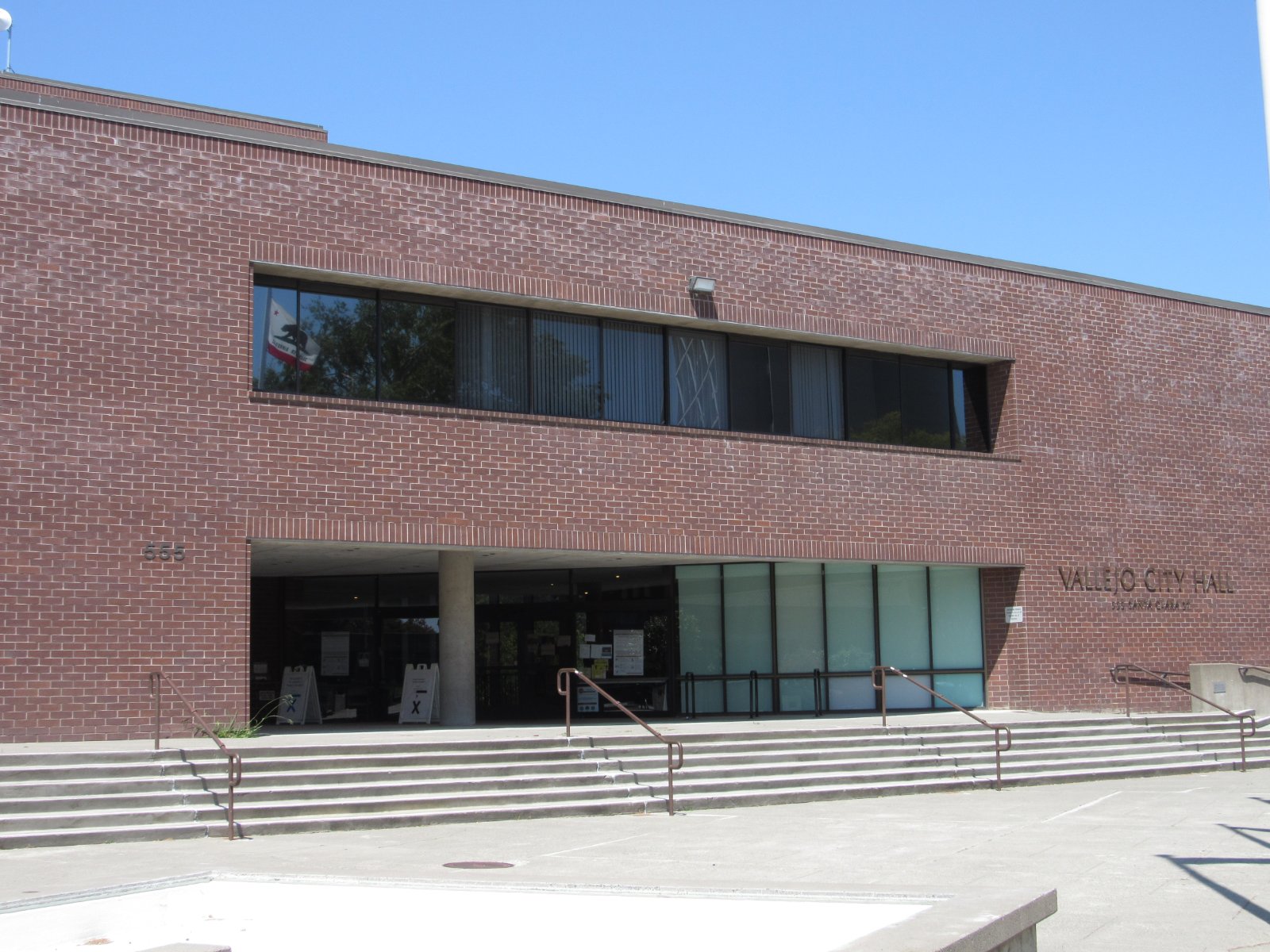
Photo: Kiddo27 / Wikimedia Commons, CC BY-SA 4.0.
Vallejo Moving Takes Local Planning
Downtown parking limits
Several downtown-adjacent blocks carry posted time limits. Under the city’s residential parking program, Zone B — blocks on Georgia, Sutter and York Streets — is two-hour parking with permits available to residents, and the citywide 72-hour rule and street-sweeping schedule still apply on top of it. Two hours is less than most apartment moves take, so we check the signs, the expected loading time and the door-to-truck path before move day, and the dispatcher picks an arrival window rather than treating a restricted curb as guaranteed staging.
Hillside streets and driveways
Vallejo has a lot of sloped approaches, narrow driveways and limited turning space. We review the property entrance and the truck approach, and if the vehicle has to stand farther away, the sales specialist explains the longer carry and puts the labor into the quote assumptions instead of discovering it on the clock.
Mare Island and controlled property access
Mare Island properties involve gates, commercial spaces and routes that behave nothing like a standard residential block. We confirm the gate instructions, the operating hours and the available loading area, and the crew leaves with a documented arrival and contact plan.
School zones and timed restrictions
Parking around Vallejo High School is restricted on school days from 8:00 a.m. to 3:30 p.m. across five blocks, which is exactly the window most weekday moves want. We check the move date against the posted restrictions during planning and build the crew schedule around legal access rather than hoping for an open curb.
Why Vallejo Customers Choose California Movers USA
Written hourly or flat-rate pricing. Most short local moves are hourly; a larger or defined scope may be quoted as one flat job. Where each applies is set out in the pricing policy.
In-house crews. Movers are our own employees, trained, background-checked and led by a foreman. The job is not handed to a marketplace crew.
One chain of responsibility. A sales specialist owns the scope, a dispatcher the logistics, a foreman the day. Changes travel the same chain, so the crew arrives with the confirmed version of the move.
Operating record. 10+ years in operation, 15,000+ completed moves and a 4.8 rating across 1,150+ reviews.
Vallejo Moving Costs
The standard local package is $175 per hour for two movers and one truck, or $270 for four, with a three-hour minimum that is our own booking policy rather than a state requirement. Hourly suits a move where time turns on stairs, carry distance, elevators and packing readiness. A flat rate suits a larger household or a defined multi-stop job with a confirmed inventory and access plan.
What moves the total: added inventory, packing, storage, an extra stop, a specialty item, or access materially different from what was described. Each of those is documented and approved before the work happens. How a scope becomes a written estimate is set out in the moving quote guide.
Vallejo Property Types We Move
Downtown apartments sit on streets with posted time limits, so the truck’s position is decided before the crew touches a box. Hillside homes around Vallejo Heights and Glen Cove turn on street width, grade and whether a full-size truck can turn at the top rather than reverse the length of the block. Mare Island residences and workspaces need access arranged with the property in advance. Single-family houses with garages carry a good part of the load in the garage and side yard. Condos and managed communities bring HOA rules, a booked window and sometimes a certificate of insurance. Small offices and retail spaces add operating hours and a loading order for furniture, files and equipment.
Moving Services Available in Vallejo
Each of these is planned around access at both ends: local moving, apartment moving, packing, furniture moving, piano moving, and storage when move-out and move-in do not line up.
Vallejo Neighborhoods We Serve
Downtown Vallejo
Time-limited parking and apartment access. A planned arrival and a legal loading position go into the quote assumptions and the dispatch notes.
Mare Island
Gates, commercial spaces and varied property layouts. Entry instructions and a usable staging area are confirmed first.
Glen Cove
Sloped streets and homes with garages, so the complete inventory and a truck position that limits long carries matter most.
East Vallejo
Residential streets, school activity and garage storage. Timing and inventory are checked address by address.
West Vallejo
Older homes on compact blocks, needing measurements for furniture turns and clear curb access.
Hiddenbrooke
Gated access, driveways and HOA instructions that must reach dispatch before the crew is assigned.
South Vallejo
Industrial and residential access sitting close together, so the correct approach and loading point are confirmed.
Vallejo Heights
Hillside streets and older houses, where grade, steps and doorway protection are part of the labor plan.
Northgate
Larger homes with garages, patios and side-yard storage that have to be counted in truck space and crew time.
Common Moves From Vallejo
South to Berkeley or Oakland, the delivery end is the harder half: contested kerb, stairs, building rules. North to Santa Rosa it is the opposite — easy kerb, long driveways, more inventory. East to Concord the drive is short and the apartment loading window usually sets the start time. Into San Francisco, dispatch plans the bridge run and the city-side parking as two separate problems. Regional work sits under Bay Area moving.
Further out, the move is quoted as long-distance, and one crossing a state line under interstate moving.
Licensed, Insured and Ready for Property Requirements
We operate under CAL-T203846 and carry company insurance for the moving operation. If an HOA, apartment building or commercial property needs a certificate of insurance, send its certificate-holder wording and deadline early and we issue it for the scheduled move. Valuation for the shipment itself is a separate matter, set out in the move documents: declare high-value items, choose the option that fits the shipment and read the claim process before signing.
Vallejo Moving FAQs
How much do Vallejo movers cost?
The total depends on billable time and the confirmed scope rather than on a headline figure: a larger crew, a specialty item or a difficult carry each change the written price. The hourly and flat-rate figures are in the costs section above.
Can you move to or from Mare Island?
Yes, and it needs arranging rather than assuming. Mare Island property access is controlled by the owners and managers rather than by the street, so the crew and the truck have to be expected: who is admitting them, through which entrance, and within what hours. Send us the property contact when you book and we clear the access ahead of the date. Buildings there also tend to be larger than their street frontage suggests, which affects crew size more than it affects the drive.
Do hillside streets or school zones change the plan in Vallejo?
Both can, and both are solved by picking the hour rather than paying more. On the steeper hillside streets the question is whether a full-size truck can turn at the top; where it cannot, the move runs as a shuttle with a smaller vehicle, which costs time instead of becoming impossible. Near schools, timed restrictions and drop-off traffic make the first and last hours of the school day the worst window for parking a truck, so we schedule around them when the address sits in one.
Can you move me from Vallejo to another state?
Yes, under interstate moving, which is planned from a verified inventory, route and written scope rather than billed by the hour.
CONTACT US
238 Georgia St, Vallejo, CA 94590, USA
Toll Free: (415) 579-2747
Toll Free: (415) 579-2747
Monday - Saturday
8:00am - 8:00pm
Pacific Time Saturday
8:00am - 8:00pm
Pacific Time
8:00am - 8:00pm
Pacific Time Saturday
8:00am - 8:00pm
Pacific Time