Moving to San Diego: A Relocation Guide
San Diego is one of the few large California cities that grew after 2020 — 1,406,106 residents, up 1.6% since April 2020. Mild weather, a stable defense and biotech economy, and housing that costs less than the Bay Area but more than most of the country. Here is what each area means for a move, what it costs, and what changes on move day.
San Diego in numbers
San Diego is one of the few large California cities that grew after 2020. The estimate for July 1, 2025 is 1,406,106 residents, up 1.6% from the April 2020 base, while the state as a whole slipped 0.5% and San Francisco fell about 6%.
From Census Bureau QuickFacts:
- median household income: $108,077 (2020–2024, in 2024 dollars);
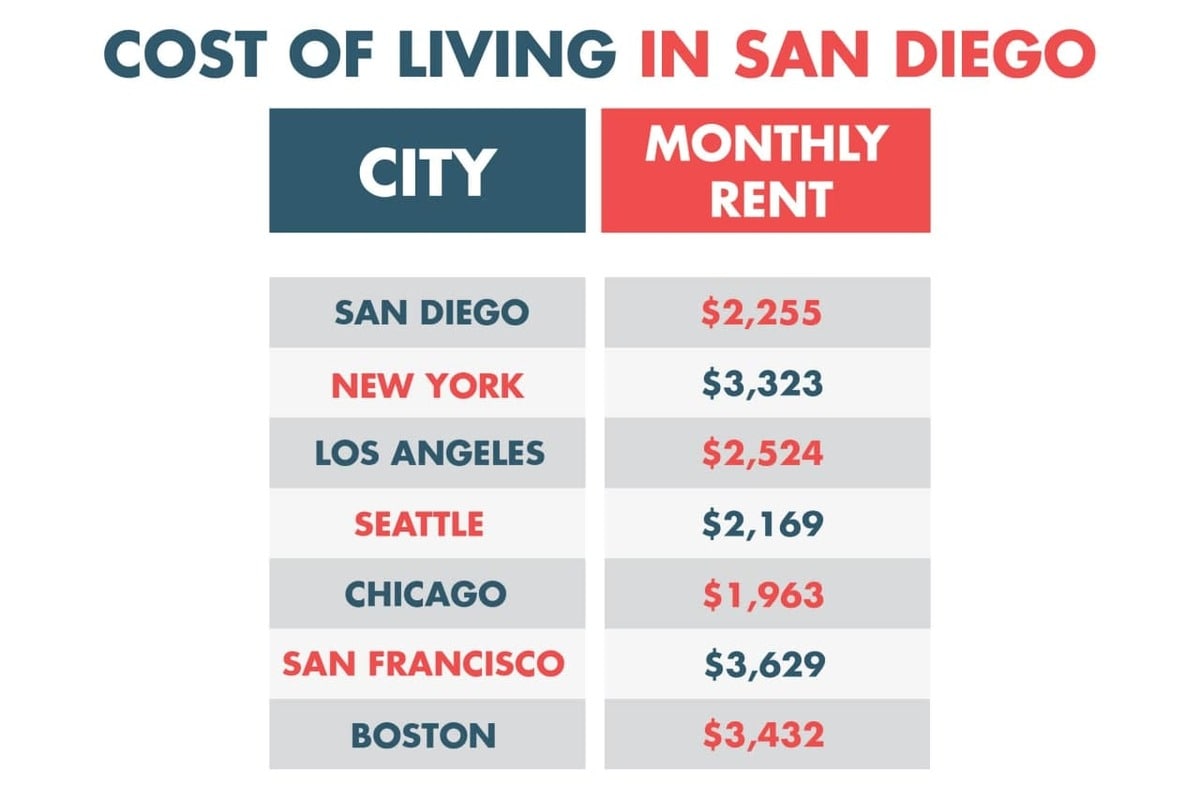
- median gross rent: $2,313;
- median value of an owner-occupied home: $906,700;
- homeownership rate: 47.3%;
- persons per household: 2.52.
The short version: cheaper than the Bay Area, more expensive than most of the country, and the only large California metro currently adding people at a steady rate.
Why people move here
Three reasons come up repeatedly, and all three are real.
The climate is the mildest in the continental United States — dry, sunny, and narrow in its temperature range, with coastal fog in May and June that locals call May Gray and June Gloom. The economy is unusually stable, built on defense and the Navy, biotech and life sciences, healthcare, tourism, and a growing tech presence. And the coast is genuinely accessible in daily life rather than a weekend trip.
What people underestimate is that San Diego is a collection of distinct communities spread over a very large area, separated by canyons and freeways. Where you live determines almost everything about your day.
The areas, and what each means for a move
Downtown, East Village, Little Italy. High-rise living with freight elevators, loading docks, and booked move windows. Reserve the elevator and get the certificate of insurance sorted two weeks out.
North Park, South Park, Hillcrest. Older bungalows and small apartment buildings, walkable, and often with narrow streets and no driveway. Street parking for a truck needs planning.
La Jolla, Del Mar, Pacific Beach. Coastal, expensive, and frequently steep. Cliffside homes with long stair carries are common, and they change how a move is crewed.
Carmel Valley, Scripps Ranch, Rancho Peñasquitos. Suburban, family-oriented, wide streets, garages. The easiest access in the county, and often HOA rules to check.
Chula Vista, Eastlake, Otay Ranch. Newer master-planned communities in the South Bay, more space for the money, HOA move-hour rules common. See Chula Vista.
Clairemont, Kearny Mesa, Mira Mesa. Central, practical, mid-century housing, and often the best value in the city proper.
What it costs to live here
Housing is the whole conversation. A median rent of $2,313 and a median home value of $906,700 against a median household income of $108,077 makes San Diego expensive relative to income — the gap between what people earn and what housing costs is wider here than in San Jose, where salaries are higher.
- Utilities run above the national average, and SDG&E electricity rates are among the highest in the country. Mild weather offsets some of it.
- Water is expensive; most of it is imported.
- Sales tax is the 7.25% statewide base plus local district taxes, per the CDTFA.
- Transportation. Most households need a car; the trolley and bus network is good downtown and thin elsewhere.
Jobs, the military, and the border
San Diego’s economy has three features that shape moves here.
The military presence is large — Navy and Marine Corps installations across the county — which means a steady volume of PCS moves with their own timing and paperwork. See military moving.
Biotech and life sciences cluster in Torrey Pines, Sorrento Valley, and UTC, which is why the northern coastal communities are priced the way they are.
And the Tijuana border shapes the South Bay economy and cross-border commuting in a way that has no equivalent in Northern California.

What makes a San Diego move different
- Distance. San Diego County is over 4,200 square miles. A move from Chula Vista to Oceanside is 60 miles, which changes the pricing structure.
- Canyons and hillside homes. Long stair carries are common on the coast; tell the crew before the day so the right number of movers is scheduled.
- Coastal humidity and salt air. Anything going into storage near the coast needs to be fully dry and sealed properly.
- Heat inland. East County summers run well above the coast. Early starts matter.
- HOA rules in master-planned communities set move hours and truck placement.
- Military timelines. PCS dates are fixed and often short-notice, so booking early matters more than usual.
Moving to San Diego from the Bay Area
This is one of the most common long-distance routes in the state — roughly 500 miles, normally a next-day or two-day delivery depending on the schedule.
It is usually quoted as a flat rate against a confirmed inventory, which means the accuracy of the inventory decides whether the number holds. A video walkthrough or an onsite inspection is worth the twenty minutes.
Ask for the written scope, the delivery window, and the valuation option before you book. The FMCSA explains binding estimates and the two valuation choices; for a move inside California the state household mover guidance applies.
California Movers USA runs this route regularly with in-house crews. See San Francisco to San Diego moving, San Diego movers, and pricing.
Related reading: San Diego vs San Francisco, moving to California, and how to pack for a move.
Questions people ask
Is San Diego growing?
Yes. The city was up 1.6% between April 2020 and July 2025, while California overall declined slightly.
Is San Diego cheaper than the Bay Area?
Housing is meaningfully cheaper — a median home value of $906,700 against $1.23 million in San Jose — but salaries are lower too. The gap between income and housing cost is wider here.
Do I need a car in San Diego?
Almost certainly. The trolley works well downtown and along a few corridors, but the county is spread out.
What is the weather really like?
Mild and dry, with a marine layer in late spring and early summer that keeps the coast grey until midday. Inland runs much hotter.
How much does it cost to move here from San Francisco?
It depends on the inventory and the access at both ends. Ask for a flat rate against a confirmed inventory rather than a per-pound guess over the phone.
What about military moves?
PCS moves have fixed dates and specific paperwork. Book as early as the orders allow.
Figures from U.S. Census Bureau QuickFacts and CDTFA; reviewed September 2026.
Tell us what you are moving and we will come back with a starting quote.