Moving to New Mexico From California
A median home in New Mexico costs $248,100 — roughly a fifth of one in San Jose — and 70% of households own. The other side of that is a median household income of $64,059 and a job market concentrated in labs, government and healthcare. Here are the figures, the places, the altitude and adobe realities, and what the move involves.
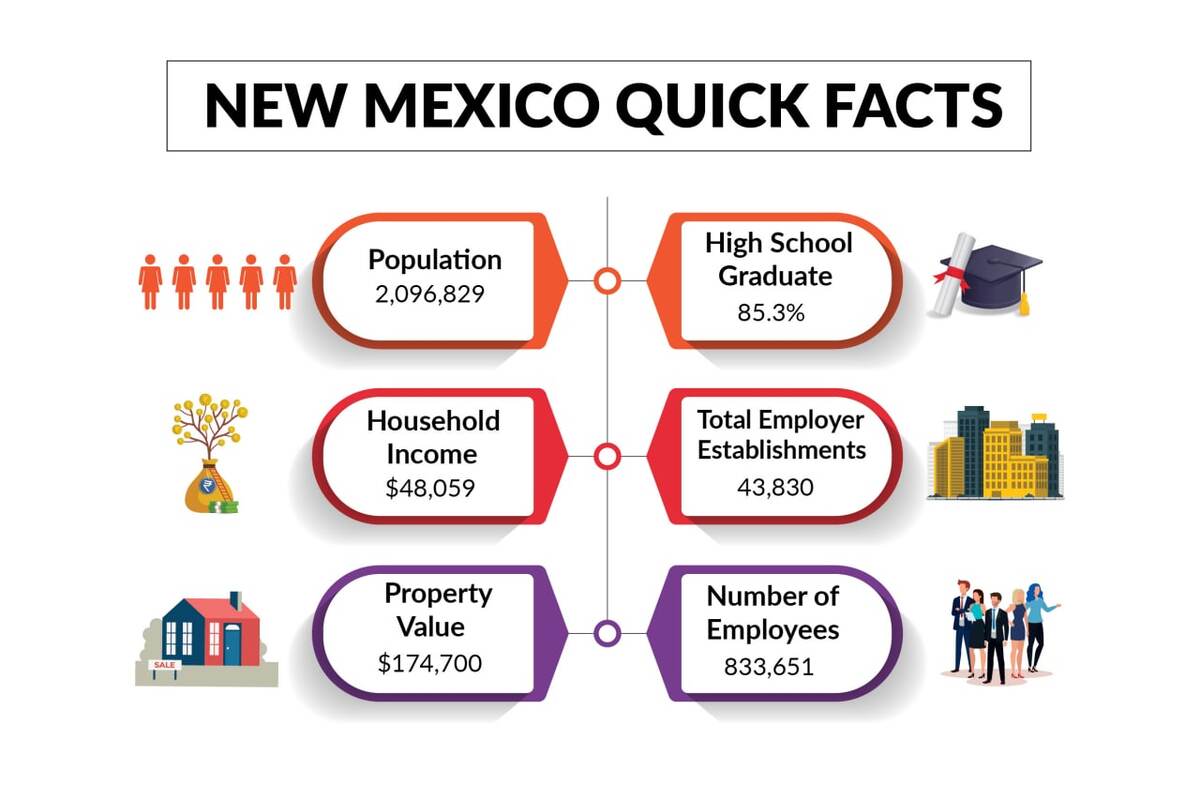
New Mexico in numbers
New Mexico is one of the least expensive states in the country and one of the slowest-growing: an estimated 2,125,498 residents as of July 1, 2025, up 0.4% since April 2020.
From Census Bureau QuickFacts:
- median household income: $64,059 (2020–2024, in 2024 dollars);
- median gross rent: $1,067;
- median value of an owner-occupied home: $248,100;
- homeownership rate: 70.0%.
A $248,100 median home value is roughly a fifth of San Jose’s. That is the largest housing-cost gap of any state in this comparison — and the income figure, $64,059, is the other side of it.
Who this state actually suits
New Mexico works for people who bring an income: remote workers, retirees, artists, anyone whose earnings do not depend on the local market. On a California salary the cost of living here is transformative.
It works less well for people job-hunting on arrival. Median household income is the lowest in this comparison set, and the market is concentrated in government, national laboratories, healthcare, education, energy, and tourism.
The state also has real challenges that an honest guide should name: educational outcomes rank poorly on most national measures, and crime rates in parts of Albuquerque are high. Neither is a reason not to move; both are reasons to choose the specific place carefully rather than the state in the abstract.
The main places
Albuquerque. The largest city, about a third of the state’s population, at 5,300 feet. Sandia National Laboratories, Kirtland Air Force Base, the University of New Mexico, and a growing film industry. Housing is very affordable; the city is spread out and car-dependent.
Santa Fe. The capital, and a different proposition entirely — see moving to Santa Fe.
Las Cruces. Southern, warmer, university-centered, and cheaper than either.
Los Alamos. The national laboratory town, with the highest incomes in the state and housing priced accordingly.
Taos and the northern mountains. Small, artistic, high altitude, real winters, and limited services.
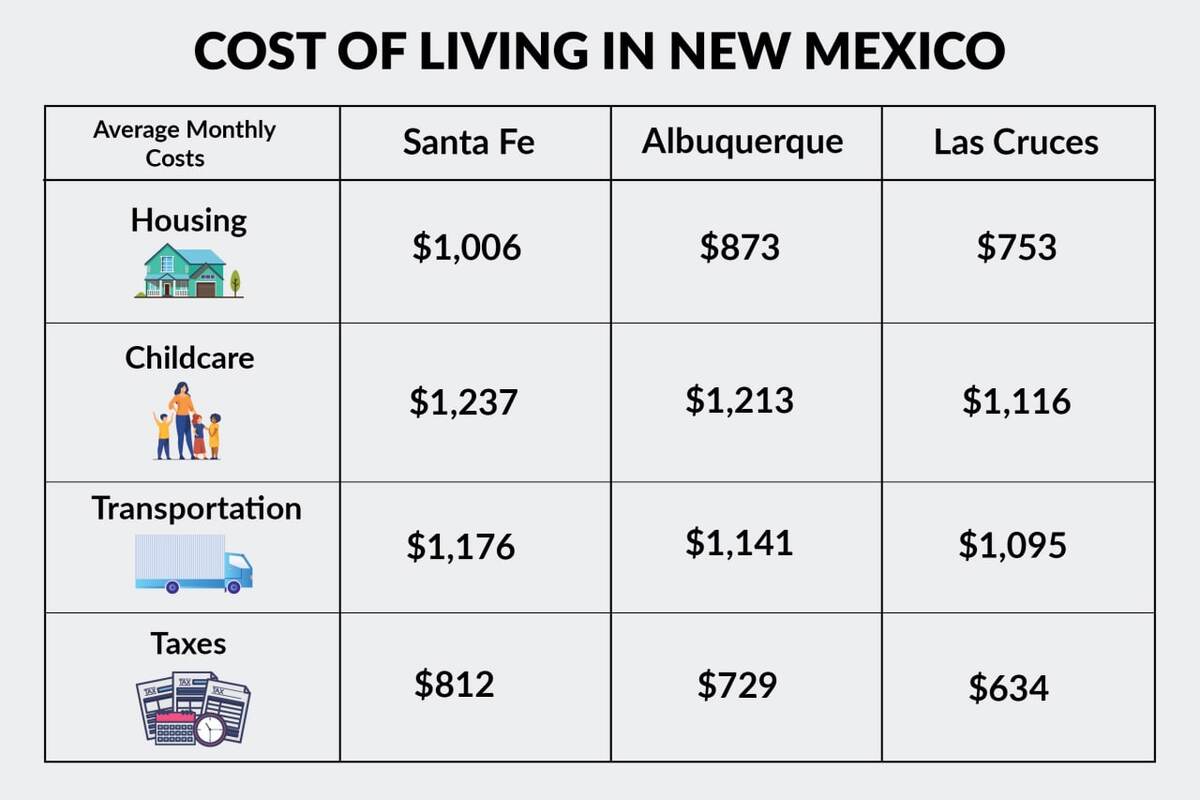
Cost of living and taxes
- Income tax is progressive but modest compared with California’s top brackets.
- Gross receipts tax replaces a conventional sales tax and applies to services as well as goods, which surprises newcomers — it shows up on things California would not tax.
- Property tax is low by national standards.
- Utilities are moderate; summers need cooling, and evaporative coolers are common in the drier parts of the state.
- Water is scarce and the policy environment reflects it. Worth understanding for the specific area.
Altitude, climate, and adobe
Most of populated New Mexico sits between 4,500 and 7,000 feet. The adjustment takes a week or two, and the sun at that altitude is stronger than the temperature suggests.
The climate is high desert: hot dry summers, cold nights year-round, and a monsoon season in July and August that brings sudden afternoon storms. Northern New Mexico gets real snow.
The housing stock is distinctive. Adobe and pueblo-style homes have thick walls, deep-set windows, and often narrow doorways — genuinely narrower than modern furniture assumes. Measure before you buy a sofa, and tell your mover if the house is adobe.
The California-to-New Mexico move
Roughly 900 to 1,100 miles depending on origin and destination, typically two to three days in transit, quoted as a flat rate against a confirmed inventory.
- Doorway width in older adobe homes is the single most common problem on arrival. Measure the entries and the largest pieces.
- Dirt roads are common outside the towns. After a monsoon storm they can be impassable for a loaded truck.
- Heat. Summer moves start early; candles, cosmetics and electronics travel in your car.
- Altitude slows any carry, particularly in Santa Fe and Taos.
- Rural service coverage is thinner, so book earlier than for a metro move.
Ask whether the estimate is binding — see the FMCSA on binding estimates — and which of the two valuation options is in your documents. Our explainer is at moving insurance and valuation.
California Movers USA runs this corridor with in-house crews. See state-to-state moving and pricing.
Arrival checklist
- New Mexico driver’s license and vehicle registration in the first months.
- Utilities booked ahead — PNM for electricity in much of the state, New Mexico Gas, and municipal water. See setting up utilities.
- Internet confirmed for the exact address; rural coverage varies sharply.
- Evaporative cooler or AC checked before summer if you are buying.
- A humidifier for winter — the air is extremely dry.
- Water rights and well status checked on any rural property.
- Home insurance quoted with wildfire exposure assessed.
Related reading: moving to Santa Fe, moving to Phoenix, best places to live in the US, and how to pack for a move.
Questions people ask
How cheap is New Mexico?
The median owner-occupied home is $248,100 and median rent $1,067 — the lowest figures in this comparison set. Median household income, at $64,059, is also the lowest.
Is New Mexico growing?
Barely — 0.4% between April 2020 and July 2025.
What is gross receipts tax?
New Mexico’s alternative to a sales tax. It applies to services as well as goods, so it appears on transactions California would not tax.
Is Albuquerque safe?
Crime rates in parts of the city are high, and they vary substantially by neighborhood. Research the specific area rather than the city as a whole.
How high is the altitude?
Albuquerque is at about 5,300 feet, Santa Fe around 7,000. Expect a week or two of adjustment.
How long does the move take from California?
Two to three days in transit, depending on origin and the agreed delivery window.
Figures from U.S. Census Bureau QuickFacts; reviewed September 2026.
Tell us what you are moving and we will come back with a starting quote.