Moving to California With Firearms: What the Law Requires
California treats anyone moving in with a firearm as a Personal Firearm Importer, with 60 days to file a New Resident Report of Firearm Ownership, transfer the firearm through a licensed dealer, or turn it over to law enforcement. Handguns must travel unloaded in a locked container, and assault weapons, machine guns, and magazines over 10 rounds generally cannot be brought in at all.
The short answer
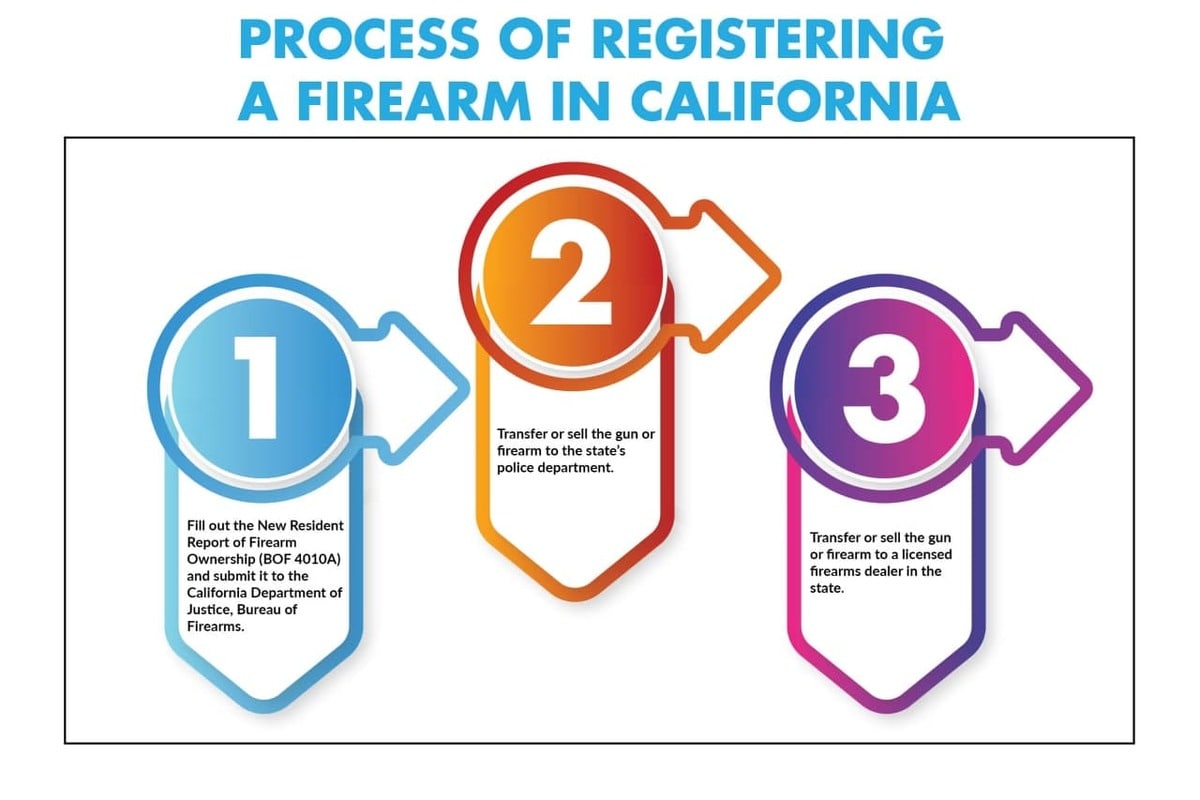
California treats anyone who moves into the state with a firearm as a "Personal Firearm Importer." Under Penal Code sections 17000 and 27560 you have 60 days to do one of three things.
- Submit a New Resident Report of Firearm Ownership (form BOF 4010A) with a $19 fee to the DOJ Bureau of Firearms;
- sell or transfer the firearm through a California licensed dealer;
- sell or transfer it to a California police or sheriff’s department, after contacting them for instructions first.
Two hard limits apply on the way in. Handguns must travel unloaded in a locked container that is not the glove box or utility compartment. Assault weapons, machine guns, and magazines that hold more than 10 rounds generally may not be brought into the state at all.
This is general information for people planning a move, not legal advice. Firearm law changes, and some of it is in active litigation. Confirm the current requirements with the California DOJ Bureau of Firearms before you load a truck.
The 60-day report
The clock starts when you become a California resident, not when the truck is unloaded. Sixty days is not long once a move, a job, and a new address are all happening at once, so put it on the calendar the week you arrive.
The report is a single form, BOF 4010A, filed with the Bureau of Firearms with the $19 fee. It applies to each firearm you brought with you. The Bureau publishes the form and the current instructions on its page for new California residents.
Failing to comply is not a paperwork problem. The state page notes that it can result in criminal prosecution under Penal Code section 27590.
Transporting handguns into the state
California requires handguns to be transported unloaded and in a locked container. The statute specifically excludes the glove compartment and the utility compartment, so a locked glove box does not satisfy it.
In practice that means a hard case with a working lock, in the trunk or the cargo area, with ammunition stored separately. The DOJ maintains a page on transporting firearms in California covering the rules for handguns and long guns.
If your route crosses several states, each one has its own rules on the road you take, and they are not uniform. Plan the route with that in mind rather than assuming one standard applies from origin to destination.
What generally cannot come in
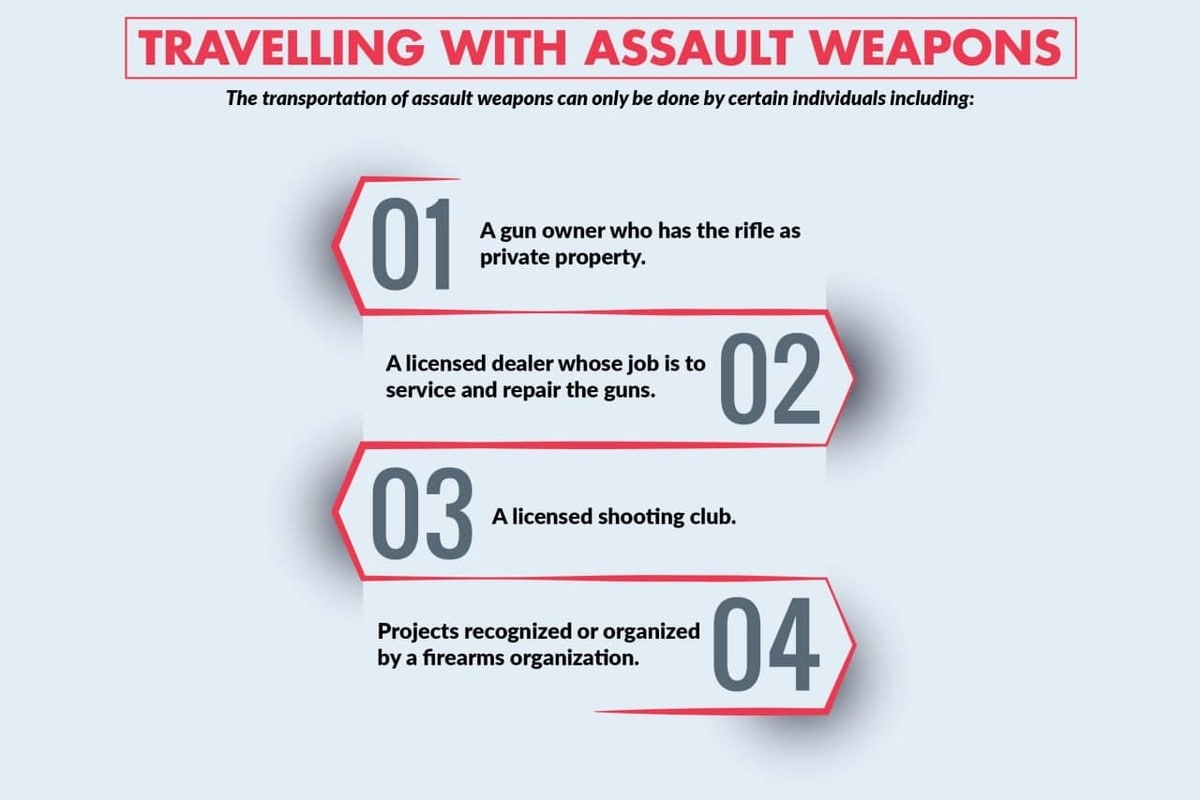
The Bureau of Firearms states that it is generally unlawful to bring assault weapons into California, and that machine guns and ammunition feeding devices with a capacity over 10 rounds may not be transported into the state.
Two practical consequences for anyone packing a truck:
- What counts as an assault weapon under California law is defined by specific characteristics, not by how a rifle looks or what it is called elsewhere. The DOJ publishes an identification guide and the characteristic lists on its firearms site.
- Standard-capacity magazines that are ordinary in other states can fall on the wrong side of the 10-round line here. This is one of the areas that has moved through the courts, so check the current position rather than an older article.
If you own something that may not be allowed, resolve it before the move — through a lawful sale or transfer in your current state — rather than after you arrive.
Movers will not carry firearms or ammunition
This is where the legal question meets the moving plan, and it catches people out on move day.
Ammunition is on the standard non-allowable list for household goods carriers, along with fuel, propane, aerosols, paint, and fireworks. Firearms themselves are handled differently by different carriers, and many will not accept them at all. Do not assume a firearm can simply be boxed and put on the truck.
Plan to transport firearms and ammunition yourself, in your own vehicle, under the rules described above. Raise it during the walkthrough so the sales specialist can confirm what will and will not be on the shipment, and so nothing has to be unpacked at the curb.
The same applies to a gun safe. An empty safe is a normal, if very heavy, item to move; a loaded one is not. Empty it, and tell the crew the weight in advance so the right equipment is scheduled.
Once you are here
A few things change after the move that are worth knowing about early:
- Buying in California. Purchases go through a licensed dealer, with a Firearm Safety Certificate, a background check, and a waiting period. The dealer walks you through it.
- Ammunition. California runs an authorization process for ammunition purchases through licensed vendors.
- Storage. State law addresses safe storage, and local ordinances in San Francisco and other cities go further. Check the city as well as the state.
- Carry. Concealed carry permits are issued locally, and a permit from another state is not recognized here.
The Bureau of Firearms publishes a summary of California firearms laws and a set of FAQs on its main firearms page. For anything specific to your situation, talk to an attorney licensed in California.
Moving checklist for firearm owners
- Inventory what you own, with makes, models, and serial numbers.
- Identify anything that may not be lawful to bring in, and resolve it before the move.
- Buy a locked hard case if you do not have one.
- Store ammunition separately, and plan to transport it yourself.
- Empty and lock any gun safe; tell the crew its weight.
- Tell your sales specialist that firearms are traveling separately.
- Note the date you become a California resident.
- File the BOF 4010A within 60 days, with the fee.
- Check local city ordinances at the new address.
How we plan around it
California Movers USA handles the household goods, and firearms and ammunition stay with you. What we do plan for is the safe itself, which is often the heaviest single item in the house and needs the right equipment, the right crew size, and a look at the stairs and doorways before the day.
Bring it up in the walkthrough. The sales specialist confirms the scope, and the lead foreman plans the carry route. See state-to-state moving for how an interstate move is coordinated, and furniture and heavy-item moving for oversized pieces.
Related reading: moving to California, driver’s license and car registration, and how to pack for a move.
Questions people ask
Do I have to register my guns in California?
New residents file a New Resident Report of Firearm Ownership within 60 days, or transfer the firearm through a dealer or to law enforcement. The DOJ page describes all three options.
How much does the report cost?
The Bureau of Firearms lists a $19 fee with form BOF 4010A. Confirm the current amount on the DOJ page before you file.
Can I drive through other states with my firearms?
Rules differ by state along the route, and the requirements are not the same everywhere. Check each state you will pass through, and keep everything unloaded and secured in transit.
Can the movers put my gun safe on the truck?
Yes, when it is empty. Tell us the weight and the access at both ends so the crew and equipment are planned for it.
What about magazines over 10 rounds?
The DOJ states that feeding devices holding more than 10 rounds may not be transported into California. This area has been litigated, so check the current position before you travel.
Reviewed September 2026. Firearm law changes; verify current requirements with the California DOJ Bureau of Firearms.
Tell us about your move and we will come back with a starting quote.