Moving Supplies: What to Buy and How Much
Six things cover most of a household move: boxes in three sizes, unprinted paper, bubble wrap, tape, a marker, and wardrobe boxes. Here is which box size takes what, how much of each material you need, what you can skip, and where to get it.
What you actually need
Six things cover 90% of a household move: boxes in three sizes, unprinted packing paper, bubble wrap, tape, a marker, and wardrobe boxes for hanging clothes. Everything else is optional.
Rule of thumb by home size
- Studio or one-bedroom
- ~30–40 boxes
- Two-bedroom apartment
- ~60–80 boxes
- Three-bedroom house
- 100+ boxes
- Packing paper
- 1 bundle per 15 boxes
- Tape
- 1 roll per 15–20 boxes
Buy fewer than you think and top up. Flat, unused boxes are easy to return; running out at 9pm on packing night is not.
Boxes: which size for what
Box size is not about volume, it is about weight. Heavy things go in small boxes so the bottom does not fail and the box stays liftable.
| Box | Size | What goes in it | Weight limit |
|---|---|---|---|
| Small | 1.5 cu ft | Books, canned goods, tools, records, shoes | Under 40 lb |
| Medium | 3.0 cu ft | Kitchenware, toys, small appliances, folded clothes | Under 50 lb |
| Large | 4.5 cu ft | Bedding, pillows, coats, lampshades | Under 50 lb |
| Extra large | 6.0 cu ft | Duvets, cushions — light and bulky only | Under 50 lb |
| Dish barrel | 5.2 cu ft, double wall | Plates, glassware, china | Under 40 lb |
| Wardrobe | With hanging rail | Suits, dresses, coats — straight off the rail | 15–20 garments |
| Picture / mirror | Telescoping | Framed art, mirrors, flat-screen TVs | One item |
The most common mistake: a large box filled with books. It will weigh 80 pounds, split at the seam, and nobody can carry it down stairs.
Paper, wrap, and padding
Before buying anything for hanging clothes, check what your mover brings. California Movers USA supplies three reusable wardrobe boxes with the crew at no charge, which covers a typical closet and takes the most expensive box size off the shopping list entirely.
| Material | Use it for | Do not use it for |
|---|---|---|
| Unprinted packing paper | Wrapping dishes, filling gaps, cushioning box tops and bottoms | — |
| Newspaper | Filling empty space | Anything white or porcelain — ink transfers |
| Bubble wrap | Corners, stems, handles, electronics | Direct contact with a TV screen or polished leather |
| Foam pouches | Wine glasses and stemware | — |
| Moving blankets | Furniture, appliances, televisions | Substituting for a box on fragile items |
| Stretch film | Keeping drawers shut, bundling, protecting upholstery | Long-term storage of leather or wood — it traps moisture |
| Mattress bag | Every mattress, every move | — |
| Cell dividers | Glasses and mugs, upright | — |
Tape, and why the cheap kind costs more
Use 2-inch acrylic or hot-melt packing tape with a dispenser. Not masking tape, not duct tape, not office tape.
- Tape the bottom seamThen cross it with two more strips perpendicular to the seam. Bottoms are where boxes fail.
- Fill the box completelyEmpty space is what lets contents move and break. Paper on top, paper below.
- Tape the top the same wayOne strip along the seam, two across.
- Label two sides and the topRoom, contents, and any handling note. Never only the top — boxes get stacked.
Duct tape does not stick to cardboard for long, and it leaves residue. It is the single most common materials mistake in a self-packed move.
Where to get materials
Free. Liquor stores have small, strong boxes with dividers. Bookshops and office supply stores break down deliveries daily. Buy-nothing groups and neighbors who moved recently often have a stack in the garage. Check that everything is dry, clean, and rigid — a used produce box is often damp.
Bought. New boxes are uniform, which matters more than it sounds: uniform boxes stack squarely on a truck, and a squarely stacked load does not shift. For a whole house, buying is usually worth it.
From your mover. Our crews bring materials to the job, and three reusable wardrobe boxes are part of the standard full-service package with no requirement to return them. See packing supplies for what we carry, and packing services if you would rather not do it at all.
What you can skip
- Specialty kits sold by room. Convenient, and priced well above the same boxes bought separately.
- Packing peanuts. They migrate, they cling, and paper does the job better.
- Vacuum bags for anything structured — suits, down, wool. Fine for bedding and casual cotton only.
- Plastic bins for a one-time move. They cost more than cardboard and get heavier than they look. Worth it only if you will keep using them.
- Colored tape for every room if you already have a marker and a system. Useful at scale, unnecessary for a studio.
Materials checklist
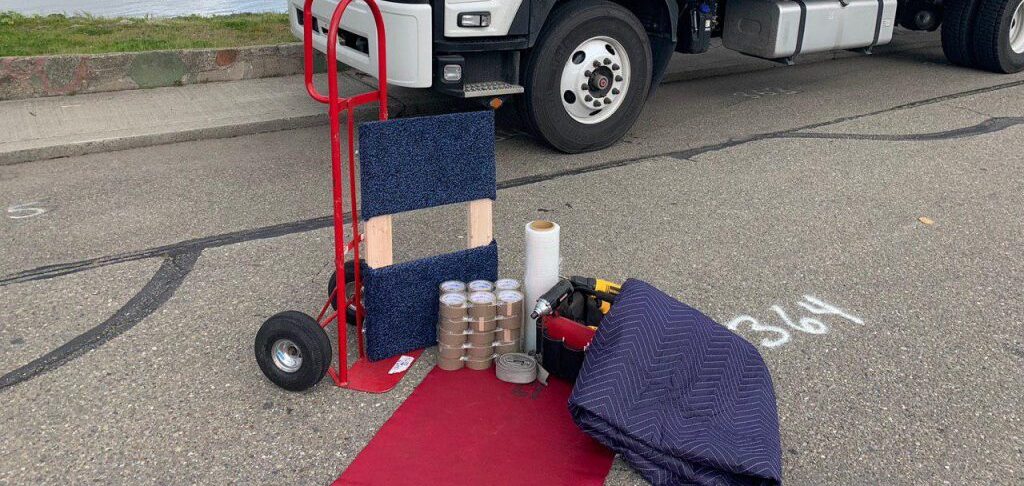
- Small, medium, and large boxes in roughly a 2:2:1 ratio.
- Dish barrels or double-wall boxes for the kitchen.
- Wardrobe boxes for hanging clothes.
- One bundle of unprinted packing paper per 15 boxes.
- A roll of bubble wrap; foam pouches if you own stemware.
- Four rolls of packing tape and a dispenser.
- Two permanent markers.
- Mattress bags, one per bed.
- Stretch film for drawers and upholstery.
- Furniture blankets, or confirmation that the crew brings them.
- A box cutter and a small toolkit for disassembly.
- Labels or colored tape if you want a room-coded system.
Keep the box cutter, tape, and markers in one bag that travels with you. They are the first things you need at the other end and the first things to disappear into a sealed box.
Related guides
The method for each room is covered separately: how to pack for a move for the schedule and the room-by-room order, dishes and glassware, books, clothes, shoes, and televisions.
If a box is damaged in transit, what the mover owes depends on the valuation option in your documents rather than on the packaging. The FMCSA sets out the two interstate choices in its liability and valuation guidance; for moves inside California see the Bureau of Household Goods and Services. Note that boxes you packed yourself are often treated differently from crew-packed boxes on a claim — more in moving insurance and valuation.
Questions people ask
How many boxes do I need?
Roughly 30 to 40 for a one-bedroom, 60 to 80 for a two-bedroom, and over 100 for a family house.
Where can I get free moving boxes?
Liquor stores, bookshops, office supply stores, and buy-nothing groups. Check they are dry, clean, and rigid.
Is bubble wrap or paper better?
Paper for wrapping and filling; bubble wrap for corners, stems, and electronics. Most moves need both.
Do movers supply materials?
Ours bring them to the job, and three reusable wardrobe boxes are included in the standard package. Ask for materials to be listed in the written scope.
Can I reuse boxes?
Yes, if the corners are square and the cardboard is not soft. A box that has been wet once is not structural any more.
What tape should I use?
Two-inch packing tape with a dispenser. Not duct tape and not masking tape.
Reviewed September 2026.
Tell us what you are moving and we will come back with a starting quote.