Living in Portland, Oregon
A median home in Portland costs $581,500 against $1,394,500 in San Francisco, rent is roughly $800 a month lower, and 52% of households own. Oregon charges no sales tax and leans on income tax instead. Here are the current figures, what the city is actually like, the winter trade-off, and what a California-to-Oregon move involves.
Portland in numbers
Portland had an estimated 635,109 residents as of July 1, 2025, down 2.7% since April 2020 — a decline, though a milder one than San Francisco’s 6%.
Portland today
- Population (July 1, 2025)
- 635,109
- Change since April 2020
- −2.7%
- Median household income
- $90,919
- Median gross rent
- $1,655
- Median home value
- $581,500
- Homeownership rate
- 52.0%
U.S. Census Bureau QuickFacts, 2020–2024 income and housing in 2024 dollars. Source.
For someone leaving the Bay Area, the headline is the home value: $581,500 against $1,394,500 in San Francisco. Rent is roughly $800 a month lower, and 52% of households own — against 38.2% in San Francisco.
The tax picture, done honestly
Oregon’s tax structure is unusual and it is the part people get wrong in both directions.
| Tax | Oregon / Portland | California |
|---|---|---|
| Sales tax | None statewide | 7.25% base plus district taxes |
| State income tax | Progressive, and high — among the higher state rates | Progressive, highest top rate in the country |
| Local income taxes | Portland area adds county and regional taxes on higher incomes | None locally |
| Property tax | Moderate, with assessment limits | Proposition 13 caps assessment increases |
No sales tax is real and it is not the whole story. Oregon leans on income tax instead, and the Portland metro adds local income taxes on higher earners. If you are moving a high salary, model the combined burden before assuming a saving.
What Portland is actually like
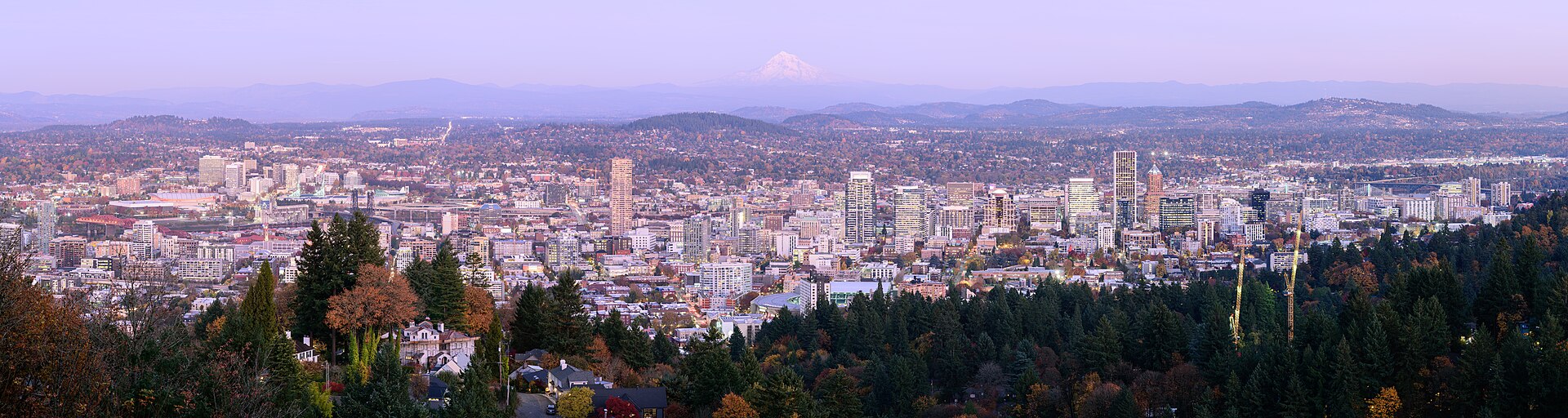
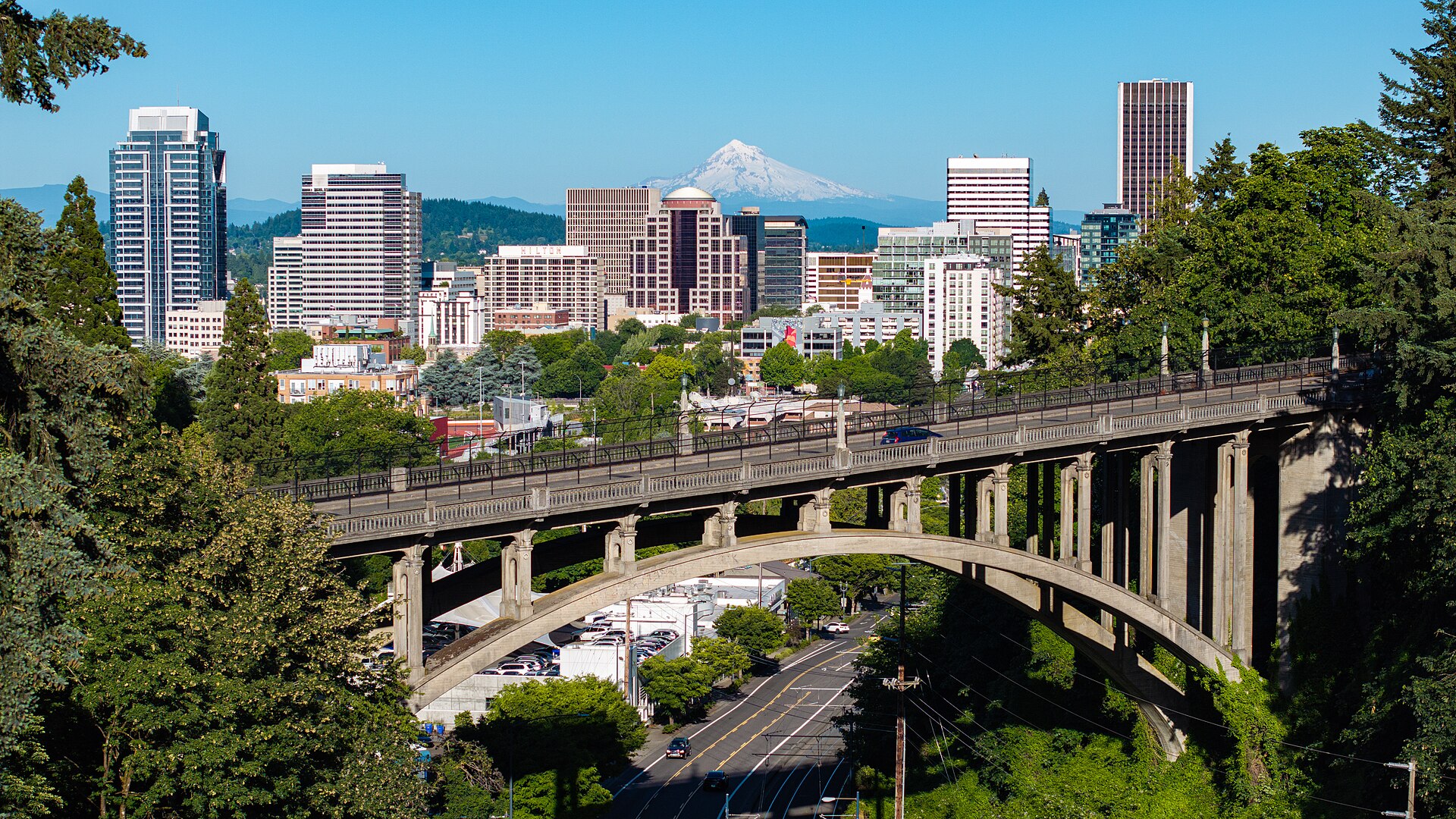
It is a mid-size city that behaves like a smaller one: walkable neighborhoods, a real bike network, good transit for its size, and a food scene well beyond what the population would suggest.
It is also green in a way California is not — Forest Park is one of the largest urban forests in the country, the Columbia Gorge is 30 minutes east, and Mount Hood is an hour away.
The trade is the winter. From November to March the sky is grey most days and the rain is persistent rather than heavy. It is not the rainfall total that gets people; it is the light. Summers, by contrast, are close to perfect — dry, warm, and long.
Neighborhoods, and what each means for a move
| Area | Character | Move-day access |
|---|---|---|
| Pearl District | Converted warehouses and new builds, urban | Easy — freight elevators, booked windows |
| Northwest / Nob Hill | Older, walkable, dense | Hard — narrow streets, limited parking |
| Southeast — Hawthorne, Belmont, Division | Craftsman homes, bike-friendly, popular | Moderate — driveways vary, mature trees |
| North / Northeast — Alberta, Mississippi | Mixed, creative, changing quickly | Moderate |
| Southwest hills | Wooded, steep, larger homes | Hard — narrow winding roads, long driveways |
| Beaverton, Hillsboro, Lake Oswego | Suburban, tech employment, families | Easy — garages and wide streets |
Jobs
Technology and hardware around Hillsboro and Beaverton — the "Silicon Forest" — plus athletic and outdoor brands headquartered here, healthcare, manufacturing, and a substantial creative sector.
The market is smaller than the Bay Area’s and pays less for equivalent roles. Portland works best for people who bring an income with them, or who are trading salary for cost of living deliberately rather than by accident.
What a California-to-Oregon move involves
Roughly 640 miles from the Bay Area on I-5, typically a one- to two-day transit, quoted as a flat rate against a confirmed inventory.
- Winter moves need weather slack. The Siskiyou Pass on I-5 near the California–Oregon border can close in snow. Agree a delivery window rather than a fixed date between November and March.
- Rain protection at both ends. Plastic covers on upholstered furniture and mattresses, floor protection inside, and boxes that never sit on a wet driveway.
- Steep, wooded driveways in the southwest hills often mean a smaller truck or a shuttle. Describe the approach honestly at the walkthrough.
- Agricultural inspection applies when entering California, not leaving it — worth knowing if you move back.
Ask whether the estimate is binding — the FMCSA explains that in its binding estimate guidance — and which of the two valuation options is written into your documents. More in moving insurance and valuation.
California Movers USA runs the California-to-Oregon corridor with in-house crews. See California to Oregon moving, state-to-state moving, and pricing.
Arrival checklist
- Oregon driver license and vehicle registration in the first months; Oregon has a DEQ emissions requirement in the Portland area.
- Utilities booked ahead — Portland General Electric or Pacific Power, NW Natural for gas, and the city for water and sewer. See setting up utilities.
- Trimet HOP card if you will use transit.
- Renters or homeowners insurance quoted for the new address.
- Good rain gear and waterproof shoes unpacked first, not stored.
- A daylight lamp, if grey winters are new to you. Locals are not joking about this.
Related reading: moving to Seattle if you are comparing Pacific Northwest options, best places to live in the US, and how to pack for a move.
Questions people ask
Is Portland cheaper than the Bay Area?
Substantially on housing — a $581,500 median home value against $1,394,500 in San Francisco, and about $800 a month less on rent. Incomes are lower too, at $90,919.
Is Portland losing people?
It was down 2.7% between April 2020 and July 2025.
Does Oregon really have no sales tax?
Correct, statewide. Oregon uses income tax instead, and the Portland metro adds local income taxes on higher earners.
How bad are the winters?
Not cold so much as grey and persistently damp from November to March. The lack of light is the adjustment.
Do I need a car?
Less than in most western cities. Central Portland is walkable and bikeable with decent transit; the suburbs are not.
How long does the move take from California?
One to two days in transit from the Bay Area, with weather adding risk on the Siskiyou Pass in winter.
Figures from U.S. Census Bureau QuickFacts; reviewed September 2026. Tax rules change — confirm current Oregon and local requirements with a licensed professional.
Tell us what you are moving and we will come back with a starting quote.