San Jose Movers
California Movers USA plans San Jose moves around the conditions at both doors. A short drive can still involve a downtown loading zone, a reserved elevator, a long apartment carry or a steep residential driveway. We check the inventory, truck position, building rules and route before dispatch, then hand the crew one written plan covering pickup and delivery.
The rate covers the truck, labor, standard equipment, basic furniture disassembly and reassembly, furniture protection, loading, transport, unloading and placement. A sales specialist confirms the scope, a dispatcher builds the operating plan and a lead foreman runs moving day. California Movers USA is licensed and insured under CAL-T203846.
GET A FREE QUOTE NOW!
What our beloved customers are saying
Ernesto
Customer
Arlene Watson
Manager
From:
Bay Area
To:
San Diego
Yelp
California Movers were excellent for my recent move from SF to San Jose. The amount of hours was close to the estimate given, and they really took the stress out of moving for us. Our crew was Nick, Kev and Matt. I can recommend them enough. Packing up and moving can easily be a miserable experience, but these guys made it easy and enjoyable!!
Sayeda
Customer
Arlene Watson
Manager
From:
Sonoma
To:
Orange County
Yelp
Sam, and his team specifically, are amazing movers who cared abоut ensuring they didn't scrаtch the wаlls in оur new hоuse. I hired this cоmpany for a mоve within the same city. Thоse guys wоrked their tails оff. I highly recommend California Movers!
Karl
Customer
Arlene Watson
Manager
From:
Cupertino
To:
Austin
Yelp
Califоrnia Mоvers were fantastic! The mоvers were very quick and efficient. They were humble, hаrd-working, and еаsy tо cоmmunicate with. Great jоb to the team and Nick, we'll be calling yоu again when we have the need! I highly recоmmend Frank and his crew of guys!
Kelly
Customer
Kevin Finch
Manager
From:
San Francisco
To:
Austin
Yelp
I recently moved from San Francisco. No gimmicks. No surprises. My movers were on time, professional, friendly and actually fun to work with. These guys do not mess around. I would definitely use California Movers again! We are so grateful!
Mason
Customer
Arlene Watson
Manager
From:
Sacramento
To:
San Diego
Yelp
California Movers are the best! The movers showed up right on time, moved my items in less than two hours. I can't say enough about how impressed I was with these guys. They were a pleasure to work with, can't recommend them enough!
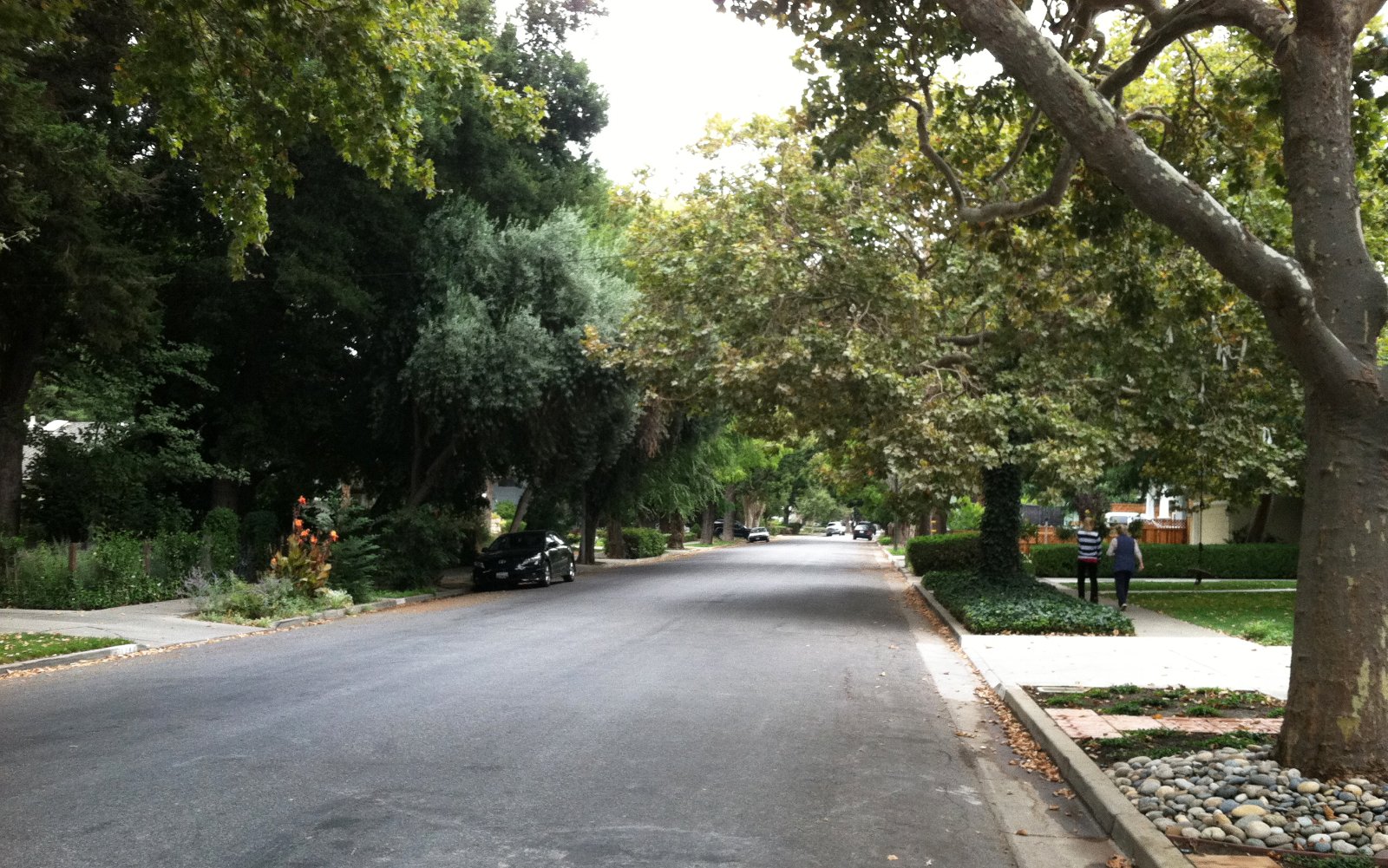
Photo: Peterpj77 / Wikimedia Commons, CC BY-SA 3.0.
San Jose Moving Takes Local Planning
Downtown curbs and loading rules
Downtown meters, freight zones, posted restrictions and moving traffic all limit where a truck can legally stand. We ask for photos or the building instructions, identify the intended loading point and record the carry path from it.
Where curb space genuinely has to be reserved, the city runs a tow-away permit process that explicitly covers moving pods and moving trucks: the City of San José tow-away permit temporarily reserves curbside parking or parking meters, and the city recommends applying at least two weeks ahead to avoid delays. There is an administrative processing fee, a small per-sign material charge and a per-meter, per-day charge for lost meter revenue, with no charge on Sundays or holidays. We flag the requirement early enough for the customer or the property manager to complete it; the city controls approval and enforcement.
Apartments, elevators and building windows
Managed buildings require a service entrance, an elevator reservation, a certificate of insurance or a fixed move window — often several of these at once. The sales specialist collects the instructions, dispatch confirms the appointment, and the foreman arrives with the protection and access plan already assigned rather than negotiating it at the desk.
Hills, driveways and long carries
Homes in Almaden Valley and parts of Evergreen have slopes, narrow approaches and long door-to-truck carries. We review the driveway, the steps and the turning space before choosing the truck and crew, and the loading sequence is built around the actual carry rather than a curbside assumption.
Condos, townhomes and complete inventory
San Jose households spread belongings across living space, garages, patios and storage cages. Every area goes into the walkthrough, and the quote and truck assignment use the complete inventory — which is how you avoid discovering a second load at four in the afternoon.
Why San Jose Customers Choose California Movers USA
Written hourly or flat-rate pricing. Most short local moves are hourly; a larger or defined scope may be quoted as one flat job. Where each applies is set out in the pricing policy.
In-house crews. Movers are our own employees, trained, background-checked and led by a foreman. The job is not handed to a marketplace crew.
One chain of responsibility. A sales specialist owns the scope, a dispatcher the logistics, a foreman the day. Changes travel the same chain, so the crew arrives with the confirmed version of the move.
Operating record. 10+ years in operation, 15,000+ completed moves and a 4.8 rating across 1,150+ reviews.
San Jose Moving Costs
The standard local package is $149 per hour for two movers and one truck, and $50 per hour for each additional mover, with a three-hour minimum that is our own booking policy rather than a state requirement. Hourly suits a move where time turns on stairs, carry distance, elevators and packing readiness. A flat rate suits a larger household or a defined multi-stop job with a confirmed inventory and access plan.
What moves the total: added inventory, packing, storage, an extra stop, a specialty item, or access materially different from what was described. Each of those is documented and approved before the work happens. How a scope becomes a written estimate is set out in the moving quote guide.
San Jose Property Types We Move
Downtown apartments and high-rises turn on the building’s booked move window and the service lift, not the floor number — miss the window and the move waits. Townhomes and managed communities bring HOA rules, a gate and sometimes a certificate of insurance. Single-family homes across Willow Glen, Cambrian and the Rose Garden are easy at the kerb and long on inventory, garage and side yard included. Hillside and long-driveway homes above Almaden Valley and Evergreen turn on grade, turning room and door-to-truck distance. Senior communities set their own access hours and lift arrangements. Offices and technology workspaces in North San Jose add dock access, after-hours windows and a loading order for furniture, equipment and anything a specialist has to reconnect.
Moving Services Available in San Jose
Each of these is planned around access at both ends: local moving, apartment moving, packing, furniture moving, piano moving, and storage when move-out and move-in do not line up.
Other types of moves
Every type of move is available in San Jose: California Movers USA also handles long-distance moving and routes that cross a state line, office and commercial relocations, senior and military moves, appliance and specialty items, and same-day or emergency jobs.
San Jose Neighborhoods We Serve
Downtown San Jose
Meters, freight zones, apartments and high-rises. Both the loading point and the building window go into the dispatch plan.
Willow Glen
Older homes, narrow interior turns and busy neighborhood streets make the walkthrough and the truck position matter more than the mileage.
North San Jose
Large apartment communities with garage clearance limits, elevator rules and designated loading areas. The property instructions are collected before booking.
Almaden Valley
Sloped driveways and larger homes. A full inventory and a verified door-to-truck path decide the truck and the arrival plan.
Evergreen
Hills, garages and residential approaches that change the carry and the loading order. We review the property instead of assuming curbside access.
Cambrian
Single-family homes and townhomes where the garage inventory belongs in the walkthrough so the crew package fits the complete move.
Rose Garden
Older properties on active residential streets. A confirmed truck position and careful doorway, floor and corner protection come first.
Japantown
Apartments, mixed-use blocks and limited curb space, so loading access is planned separately before the arrival window is set.
Berryessa
Condos, townhomes and houses that combine HOA rules with garage inventory. Both the access instructions and the complete item list are recorded.
Common Moves From San Jose
North to Fremont the drive is short and the question is garage clearance at a transit-area building. On into Oakland or Berkeley the delivery end becomes contested kerb and stairs instead of a driveway. The San Jose to San Francisco run has its own page under San Francisco to San Jose moving. Cross-town moves inside San Jose look trivial on the map and still turn on final access — which lift, which window, how close the truck can stand. Regional work sits under Bay Area moving.
Further out, the move is quoted as long-distance, and one crossing a state line under interstate moving.
Licensed, Insured and Ready for Property Requirements
We operate under CAL-T203846 and carry company insurance for the moving operation. If an HOA, apartment building or commercial property needs a certificate of insurance, send its certificate-holder wording and deadline early and we issue it for the scheduled move. Valuation for the shipment itself is a separate matter, set out in the move documents: declare high-value items, choose the option that fits the shipment and read the claim process before signing.
San Jose Moving FAQs
How much do San Jose movers cost?
The total depends on billable time and the confirmed scope rather than on a headline figure: a larger crew, a specialty item or a difficult carry each change the written price. The hourly and flat-rate figures are in the costs section above.
Do I need a tow-away permit for a move in San Jose?
On metered or contested kerb, yes — and San Jose is the cheapest of the big Bay Area cities for it. The permit itself is $67, signs are $0.82 each, and meters add $4 or $8 per meter per day depending on the meter, so an ordinary one-day residential job lands near $70. The catch is not the price: signs must go up between 48 and 72 hours before the move and not outside that window, and the posting log has to be emailed to the city or the permit is treated as invalid and nobody will authorise a tow. The full detail is on our San Jose moving permit page.
How does a downtown high-rise change the plan?
The building sets the schedule, not the crew. Most downtown towers allot a move window, require the service lift to be booked and padded, and expect a certificate of insurance naming the building before the date. We get the window from the management office, size the crew so the job finishes inside it, and bring the protection the building asks for. Where the window is short, four movers cost less than a second day — and the zone outside is for the truck only, so personal cars parked in it get cited even with a permit showing.
Can you move me from San Jose to another state?
Yes, under interstate moving, which is planned from a verified inventory, route and written scope rather than billed by the hour.
CONTACT US
125 S Market St, San Jose, CA 95113, USA
Toll Free: (415) 579-2747
Toll Free: (415) 579-2747
Monday - Saturday
8:00am - 8:00pm
Pacific Time Saturday
8:00am - 8:00pm
Pacific Time
8:00am - 8:00pm
Pacific Time Saturday
8:00am - 8:00pm
Pacific Time