Moving to San Francisco
San Francisco is 47 square miles, expensive, and smaller than people expect — and it lost about 6% of its residents after 2020, which has made the rental market easier than it has been in twenty years. Here are the current figures, what it costs to arrive, how to choose a neighborhood, and the six things that actually make a move here difficult.
San Francisco in numbers
San Francisco is 47 square miles, expensive, and smaller than most people expect. It is also a city that lost about 6% of its residents after 2020 — which, for someone arriving now, has made the rental market easier than it has been in twenty years.
San Francisco today
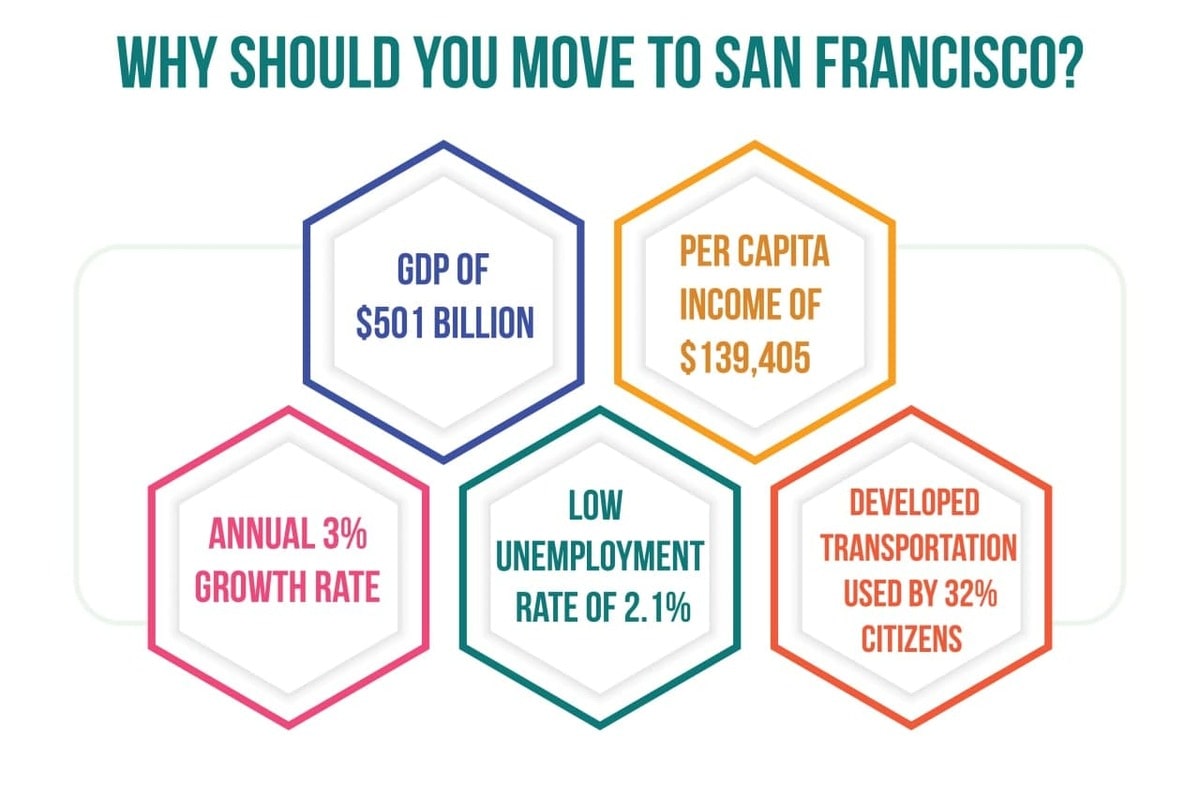
- Population (July 1, 2025)
- 826,079
- Change since April 2020
- −6.0%
- Median household income
- $140,970
- Median gross rent
- $2,476
- Median home value
- $1,394,500
- Homeownership rate
- 38.2%
- Foreign-born residents
- 34.0%
- Persons per household
- 2.21
U.S. Census Bureau QuickFacts, San Francisco County. Income and housing figures are 2020–2024 in 2024 dollars. Source.
What it costs to arrive
Budget for the first month, not the monthly rent. Landlords here typically ask for first month plus a deposit, and competitive units still ask for last month too.
| Cost | Typical | Note |
|---|---|---|
| First month rent | Median $2,476 citywide | Varies enormously by neighborhood and unit |
| Security deposit | Commonly one month | California caps deposits; ask what applies to your tenancy |
| Parking space | Often a separate monthly charge | Not included with most flats |
| Renters insurance | Usually required by the lease | Earthquake damage needs a separate policy |
| Utilities setup | PG&E and SFPUC | Book two to three weeks ahead |
| Moving truck permit | Required for reserved curb space | Arranged in advance with the city |
The cost people forget: parking. A dedicated space is a separate line item in most of the city, and street parking means permit zones, street cleaning, and a real time cost every week.
The full picture is in cost of living in San Francisco.
Choosing a neighborhood
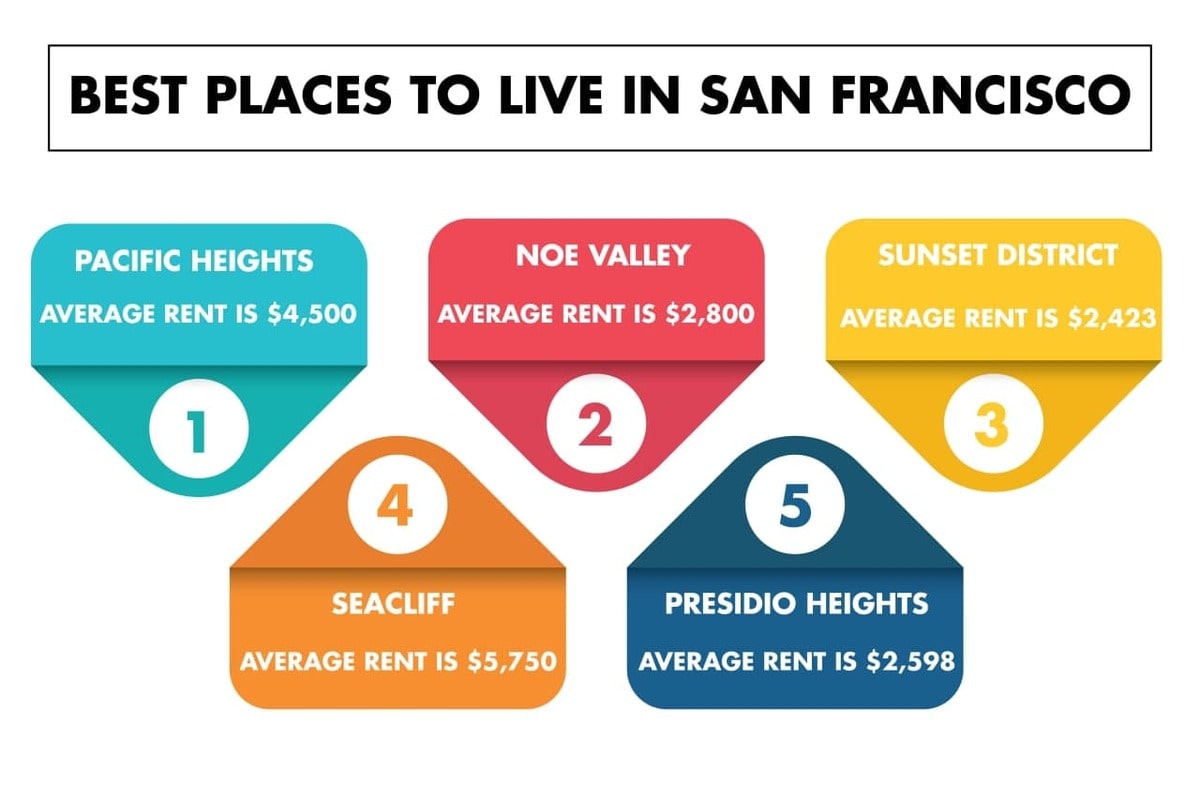
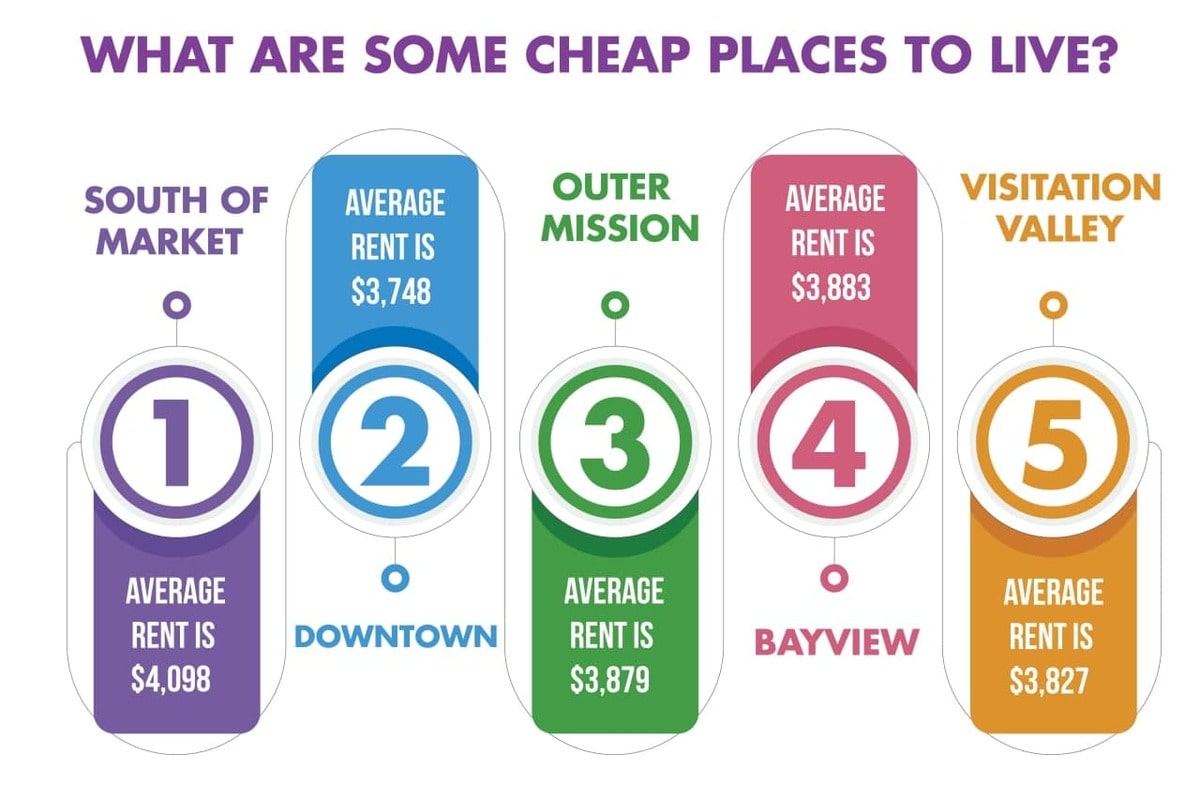
San Francisco changes character every few blocks, and the microclimate changes with it. The Mission is sunny; the Sunset, three miles west, is fogged in on the same afternoon.
- Start with the commuteDowntown, Mission Bay, and the Peninsula shuttle stops pull in different directions. Decide this first and the list halves.
- Then the weatherThe east side is warm and sunny. The west side is cool and foggy. This is a real quality-of-life difference, not a detail.
- Then the housing typeVictorian flat, 1960s apartment building, or new-build with an elevator. Each has a different move-day reality.
- Then visit at nightA block at 11am on Saturday and 11pm on Tuesday can be two different places.
Neighborhood by neighborhood is covered in best places to live in San Francisco.
What makes moving here genuinely hard
This is the part no relocation guide covers, and it is the part that decides how your move day goes.
| Condition | Why it matters | What to do |
|---|---|---|
| Hills and narrow streets | A 26-foot truck cannot reach every address | Tell the dispatcher the street; the truck size is planned around it |
| Permit parking | Without reserved curb space the carry can be a block long | Apply for a temporary no-parking permit in advance |
| Walk-up buildings | Two or three flights is common in pre-war stock | Give the flight count when you get the quote |
| Elevator windows | Buildings limit move hours and require booking | Reserve two weeks out; ask about a certificate of insurance |
| Narrow Victorian doorways | Modern sofas frequently do not fit | Measure the entry and the piece before the day |
| Street cleaning schedules | A ticketed or towed truck stops the move | Check the posted schedule for the loading side |
These six things, not the mileage, are what determine how long a San Francisco move takes and what it costs. A studio with a permit and an elevator can be faster than a one-bedroom up three flights with no curb space.
Getting set up
- Utilities booked two to three weeks ahead — PG&E for gas and electricity, SFPUC for water, Recology for waste. See setting up utilities.
- Internet ordered early; it is the only service that may need a technician appointment.
- Clipper card for Muni, BART, and the ferries.
- Residential parking permit for your zone, if you keep a car.
- Renters insurance, with earthquake coverage considered separately.
- Vehicle registered within 20 days if you are arriving from out of state, per the California DMV.
- Address changes filed with USPS, your bank, and your employer.
If you are arriving from another state, the full list of deadlines is in moving to California and the vehicle side in driver’s license and car registration.
What people wish they had known
- Bring layers, not a coat. The temperature range in a single day is wider than the range across the year.
- Summer is the cold season in much of the city. July fog is a real thing.
- The city is small enough to walk and hilly enough that you will not always want to.
- Earthquake preparedness is a normal household task, not a novelty. Water, a flashlight, and a plan.
- Street parking is a skill. Read every sign, twice.
- Furniture is a commitment. Measure the stairwell before you buy anything large.
Planning the move itself
For a move within the Bay Area, hourly pricing usually fits, because the duration depends on access rather than distance. Our standard package is $175 per hour for two movers and one truck, and includes furniture disassembly and reassembly, moving blankets and furniture protection, mattress protection, standard protection for TVs, mirrors, artwork and electronics, floor, doorway and hallway protection, loading, transport, unloading, placement, three reusable wardrobe boxes, and dispatcher coordination.
For a move into San Francisco from out of state, a flat rate against a confirmed inventory is the better structure. The FMCSA explains binding estimates and the two valuation options; for moves inside California see the Bureau of Household Goods and Services.
California Movers USA is based in San Francisco. Crews are in-house employees, a sales specialist confirms the inventory and the building conditions, a dispatcher books the elevator and the curb, and a lead foreman runs the day. See San Francisco movers, apartment moving, and pricing.
Related reading: San Francisco population and migration, moving to the Bay Area, San Diego vs San Francisco, and how to pack for a move.
Questions people ask
How much do I need to earn to live in San Francisco?
Median household income is $140,970 and median rent $2,476. Most people arriving in their twenties share a flat rather than renting alone.
Is San Francisco emptying out?
It lost about 6% of its population between April 2020 and July 2025. The decline was steepest in the first two years and has since flattened.
Do I need a car?
No, and many residents do not have one. Muni, BART, and walking cover most of the city; parking is the main reason people give theirs up.
Which neighborhood is warmest?
The east side — the Mission, Bernal Heights, Potrero Hill. The Sunset and Richmond are the foggiest.
What makes a move here expensive?
Stairs, parking, and elevator restrictions, not distance. The same inventory can take twice as long in the wrong building.
When is the best time to move?
Spring and fall. Late August and early September are the hardest because of lease turnover.
Figures from U.S. Census Bureau QuickFacts and California DMV; reviewed September 2026.
Tell us what you are moving and we will come back with a starting quote.